| Leftover Eurasian Pinguicula1 | |
|---|---|
| Subgen. Isoloba sect. Cardiophyllum | |
| P. crystallina | Cyprus, Turkey |
| P. hirtiflora | Italy, Albania, Bosnia/Herzegovina, Greece, Macedonia, Turkey |
| (P. louisii) | Albania |
| P. megaspilaea | Turkey, Greece |
| Subgen. Isoloba sect. Pumiliformis | |
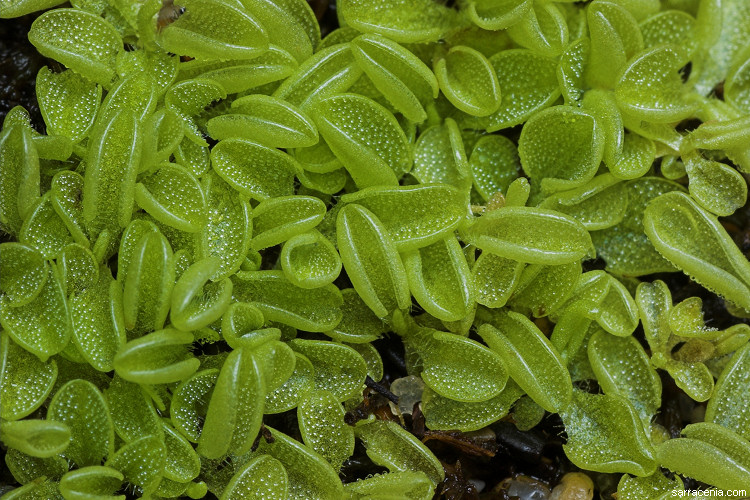
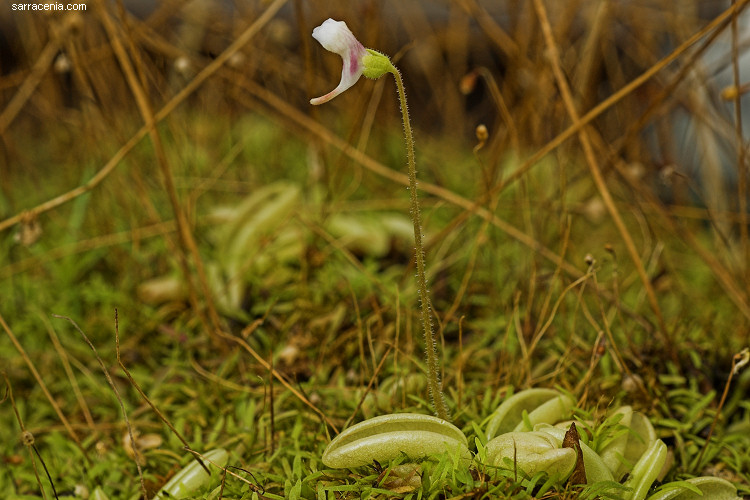
| P. lusitanica | UK, coastal France, Portugal, Spain, n Morocco |
|
1All homophyllous. |
|
Q: Leftover European Pinguicula
A: The species on this table don't easily fit into my other pages, so I have relegated them to
this mishmash page.
in Europe, nearly all the species of
Pinguicula form hibernacula. However, there are a few species which act much more
like tropical species. These plants are in section Cardiophyllum, and are very similar
to each other. The botanically
conservative approach is to reduce all three to a single species; in such a treatment
P. crystallina would be called P. crystallina subsp.
crystallina, and P. hirtiflora and
P. louisii would be combined into the single entity called
P. crystallina subsp. hirtiflora (Ten.) Strid.
Another approach would be to list them all as separate species. There is no consensus.
Changes from 2016-2018
Subgenus Isoloba section Cardiophyllum is reduced slightly, as
P. louisii was treated as a variety of P. hirtiflora.
Subgenus Isoloba section Pumiliformis is elevated from subsection, with a single
species.
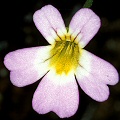 P. hirtiflora
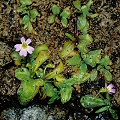 P. hirtiflora
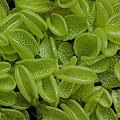 P. lusitanica
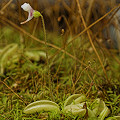 P. lusitanica
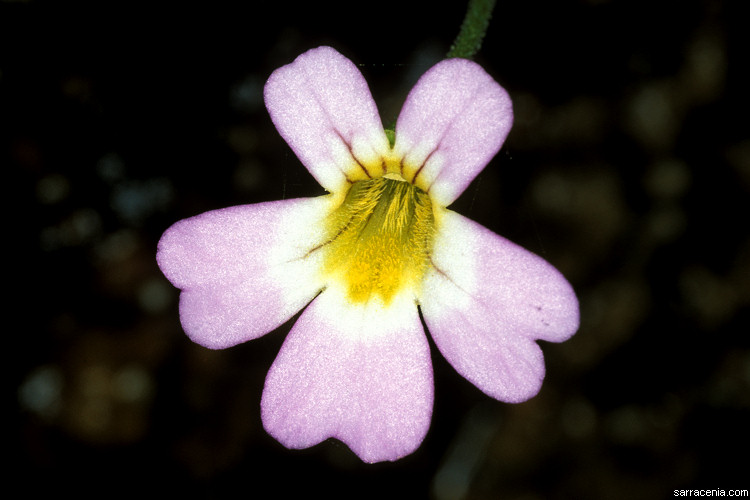
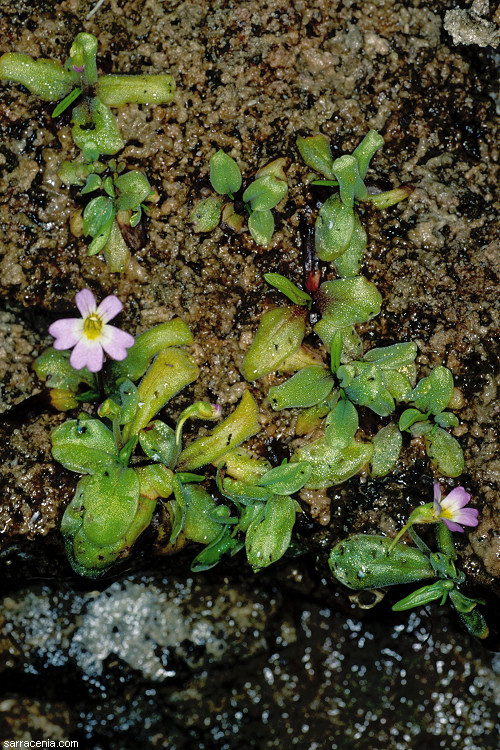
Pinguicula hirtiflora
The species Pinguicula louisii was reduced to
Pinguicula hirtiflora var. louisii (Markgr.) Ernst by Roccia et al. (2016),
although they mistakenly listed it as a subspecies on their list on page 65.
Pinguicula lusitanica
This cute little species never gets large. It germinates, lives for only a few
months, makes a tiny rosette and an equally tiny flower, and then without further notice it produces seed and dies. The whole
process takes less than a year. If you want to grow this plant, you do not have to collect seed because they will germinate
without intervention wherever they land, if conditions are suitable. In fact, it can be a small but entertaining little weed.
Just keep it away from your seedling pots of other Pinguicula so it does not confuse you.
Pinguicula megaspilaea
Differs from the other Pinguicula in its section by the production of long, upright leaves, rather like those of
P. longifolia.
Page citations: Casper, J. 1966; Lampard, S. et al. 2016; Rice, B. 2006a;
Roccia, A. et al. 2016; Schlauer, J. 2002;
Shuka, L., et al. 2007.


