| Pinguicula of USA & Canada | |
|---|---|
| Arctic-temperate species | |
| Subgen. Pinguicula sect. Pinguicula | |
| P. macroceras1 | USA; Canada; Japan & Russia |
| P. vulgaris | USA; Canada; Europe & Morocco |
| Subgen. Temnoceras sect. Nana | |
| P. villosa | USA; Canada; n Europe & Asia |
| Temperate-subtropical species | |
| Subgen. Isoloba sect. Isoloba | |
| P. caerulea1 | USA |
| P. ionantha | USA |
| P. lutea1 | USA |
| P. planifolia | USA |
| P. primuliflora | USA |
| P. pumila1 | USA; Bahamas |
|
1Floral color variants have been given infraspecific names (see species notes). |
|
Q: Pinguicula of the USA and Canada
A: As you can see in the table to the right, there are two main groups of
Pinguicula in this region. The northern trio of species are all species that survive the
harsh winter dormancy by producing hibernacula---tight little resting buds that look like small heads of garlic.
The temperate-subtropical
species are in leaf year-round, although they tend to become a bit smaller during the winter if the conditions
become very cold. Otherwise, their rosette sizes are mostly governed by the availability of water.
Out of flower, these species are essentially impossible to distinguish from each other, except
P. planifolia, P. pumila, and
sometimes--sometimes!--P. primuliflora. While these plants can usually be instantly identified by flower
color, the occasional flower variant (such as white forms) can confound easy identifications. Fortunately, if you are really
pressed for identifications, you can use the nature of the hairs on the flower palate to identify them.
Hybrids are only recorded for crosses between P. vulgaris
and P. macroceras in cultivation.
Changes from 2016-2018
All of the subgenera or sections as represented in this region are unchanged.
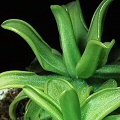
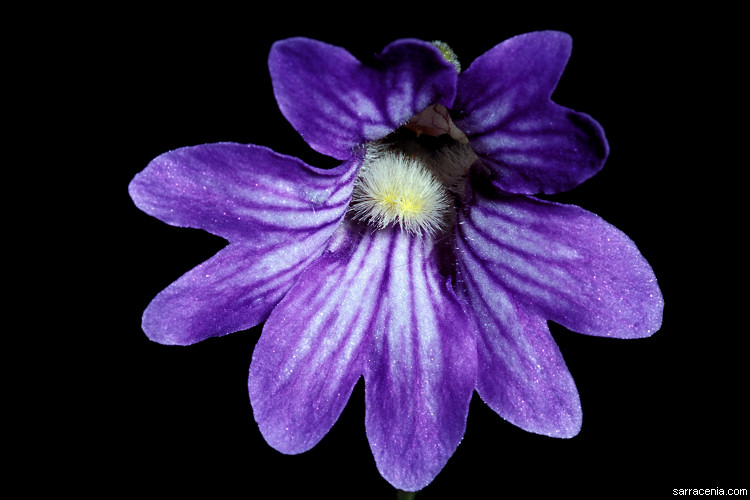
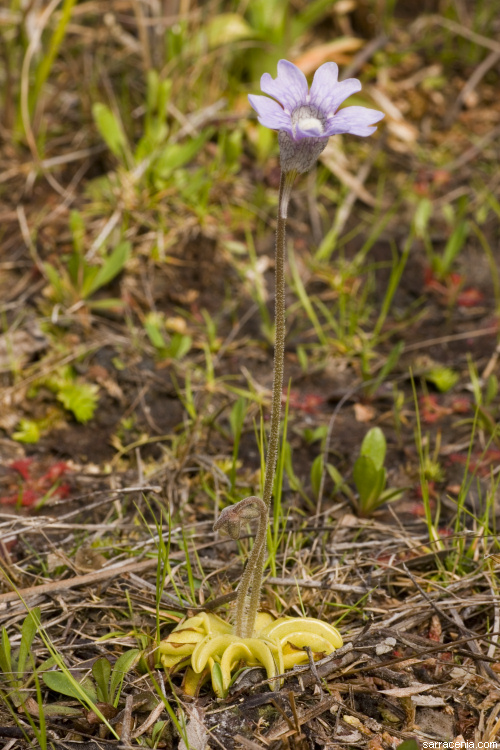
Pinguicula caerulea
In my experience, one of the easiest of the temperate-subtropical species
to grow.
Normally the flowers are white or blushed blue, with strong blue venation that dominates the overall color
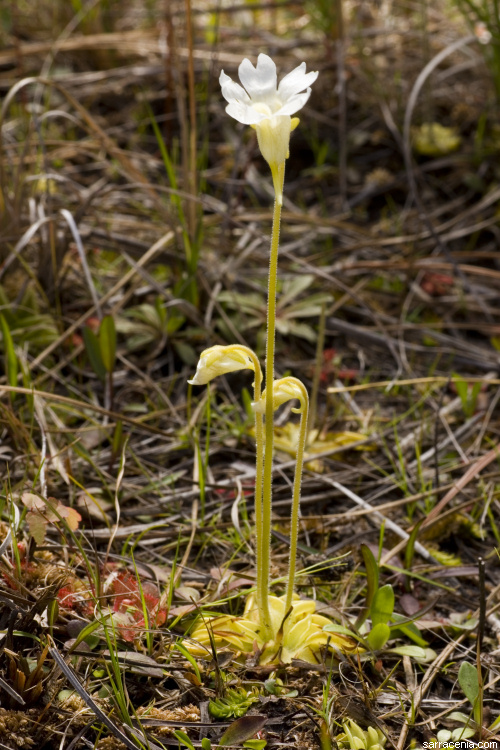
of the flower. I have seen occasional all-white flowers in North Carolina, however, which have been described as
P. caerulea f. leucantha Schnell.
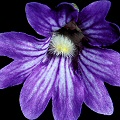 P. caerulea
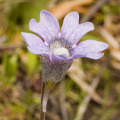 P. caerulea
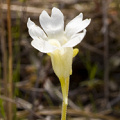 P. c. f. leucantha
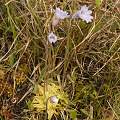 P. caerulea
 P. caerulea
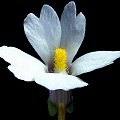
Pinguicula ionantha
Restricted to a small area in northwestern Florida, and listed as Threatened by
the US Endangered Species Act. Many of the plants in cultivation produce seed, but the seed has extremely low viability.
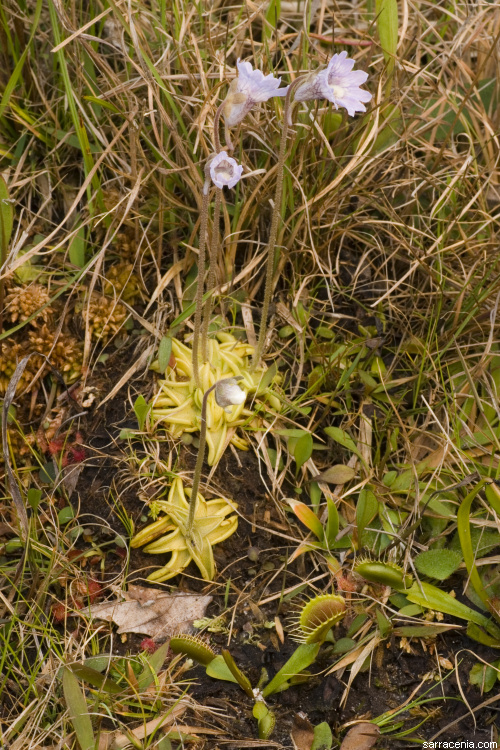
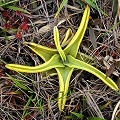
Pinguicula lutea
A rarity in the genus---this plant produces bright yellow flowers! This plant is
particularly prone to making large, monstrous flowers that have extra petals. Straw-colored plants are occasionally encountered, but very
rarely one might find pure white flowers (although the exserted palate center is still yellow). This variant is called
P. lutea f. alba Folkerts & Freeman.
 P. lutea
 P. lutea
 P. lutea
 P. ionantha
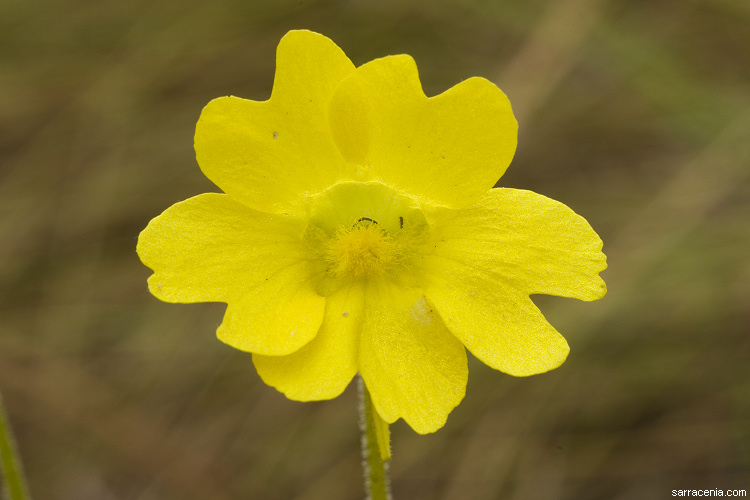
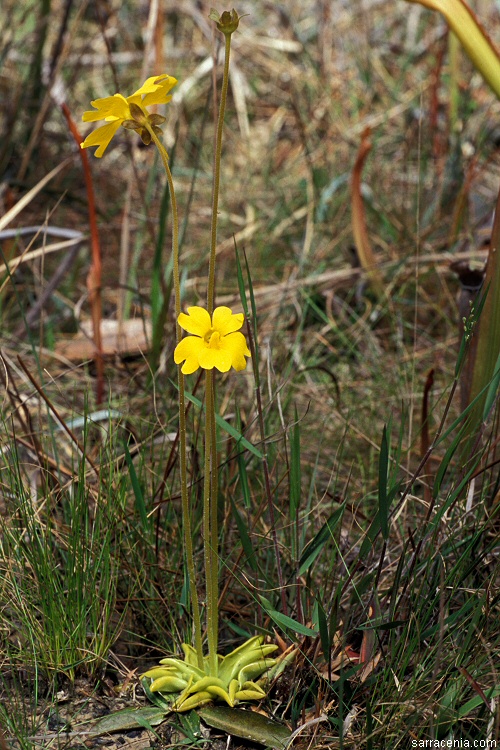

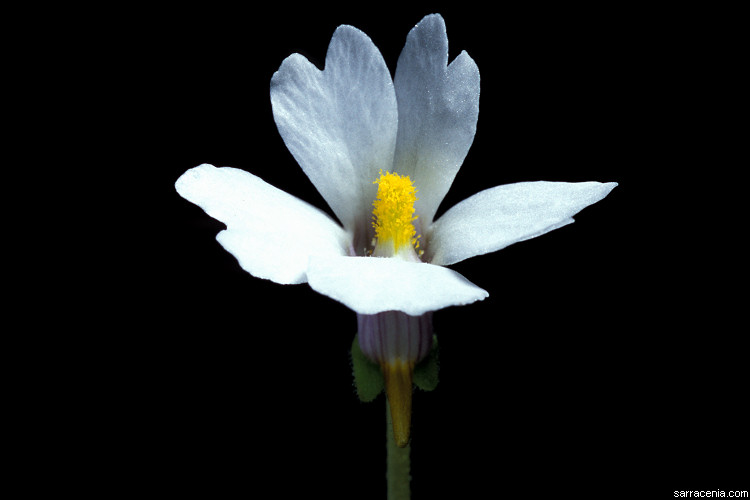
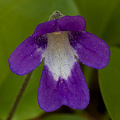
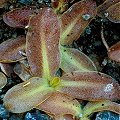
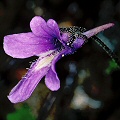
Pinguicula macroceras
This plant has a messy taxonomic history. It is very closely related to
P. vulgaris, and quite honestly I cannot always tell them apart and end up keying them based
upon range.
In the western USA, this plant has a very patchy range and the different populations often have slightly different
characteristics. These populations have been given different subspecific names, but after
much work I have concluded that such names do not have merit.
A prominent example of this relates to the plants in the area of the California-Oregon border, which have been given
a subspecific name, P. macroceras subsp. nortensis.
I have studied populations of this plant in eastern Oregon, northwestern California, and north-central California,
and have concluded that the "nortensis" designation does not have merit. (See Rice 2011c.)
Lampard, S. et al. (2016) claims that a white-flowered variant has been given the name
P. macroceras f. alba. by Casper, but neither I nor Bob Ziemer can find any evidence this is true.
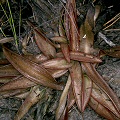 P. planifolia
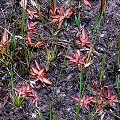 P. planifolia
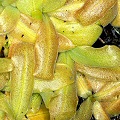 P. macroceras
 P. macroceras
 P. macroceras
 P. macroceras
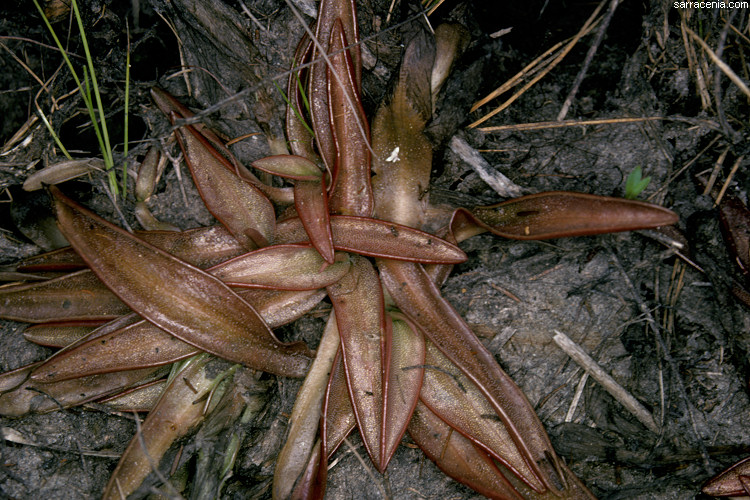
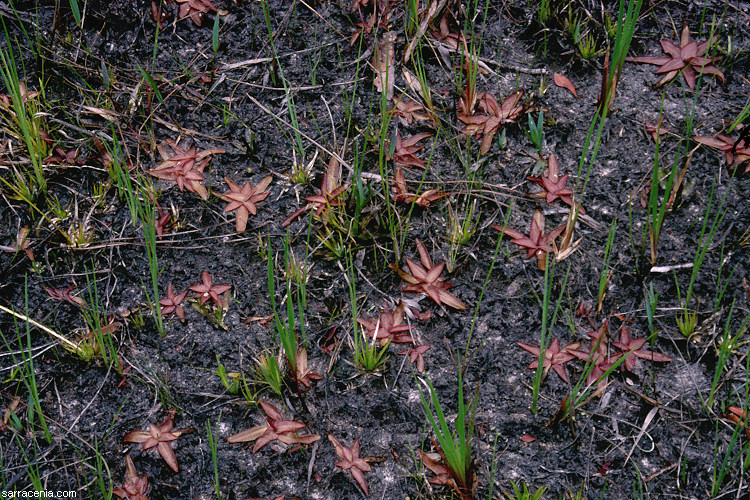
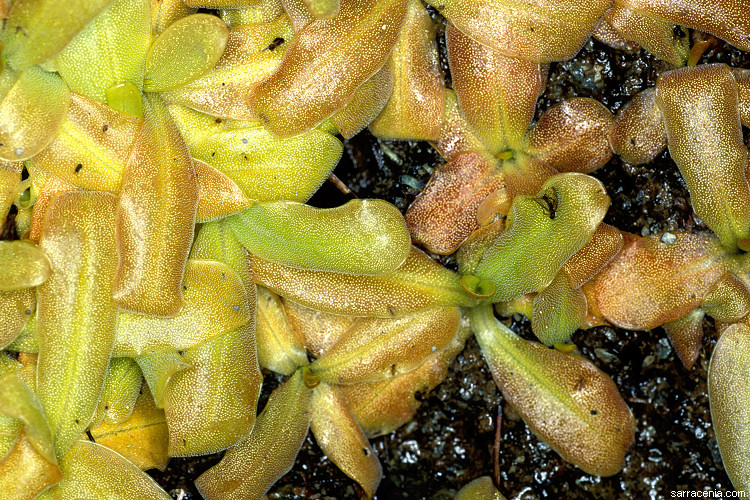
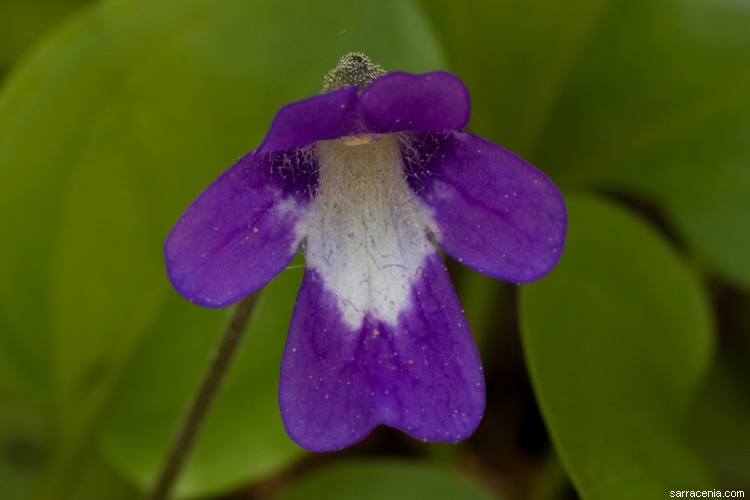
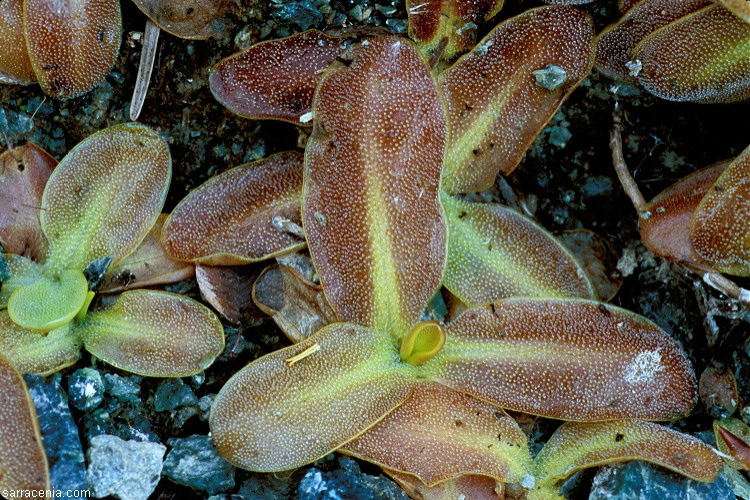
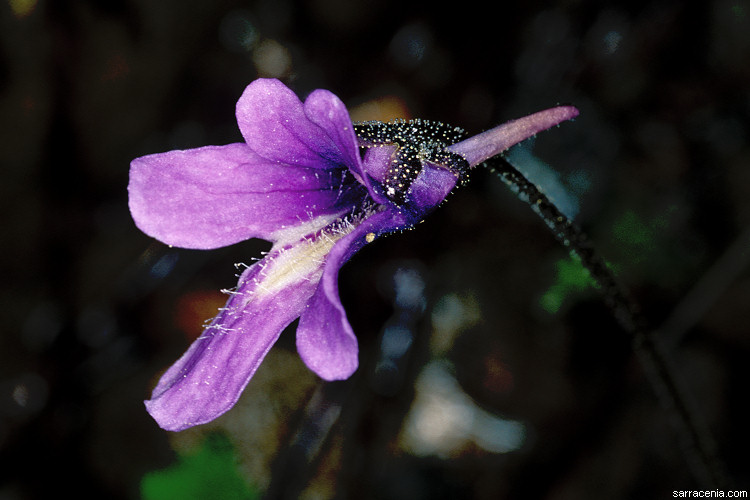
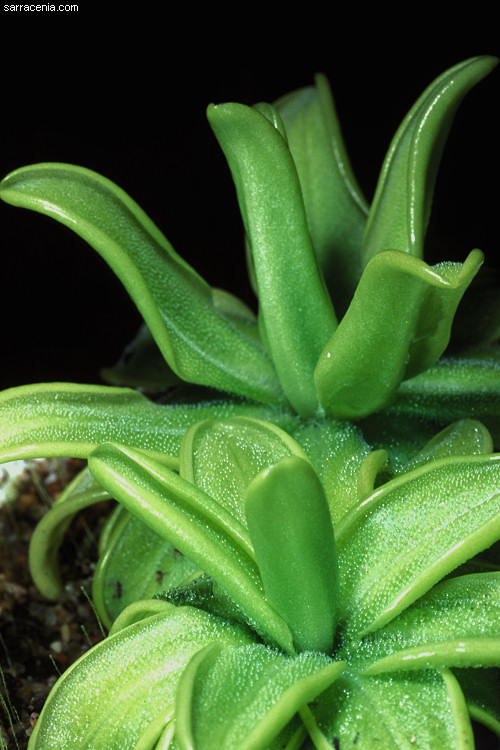
Pinguicula planifolia
Unique among the southeastern species in that they usually have
reddish leaves, although green-leaved variants occur here and there. The leaves are very flat, without upward-curled margins,
which is also a good indicator of species when they are out of flower. I have seen this species on very muddy flats in addition
to the usual, grassy habitat. It is often submerged during the wetter parts of the year.
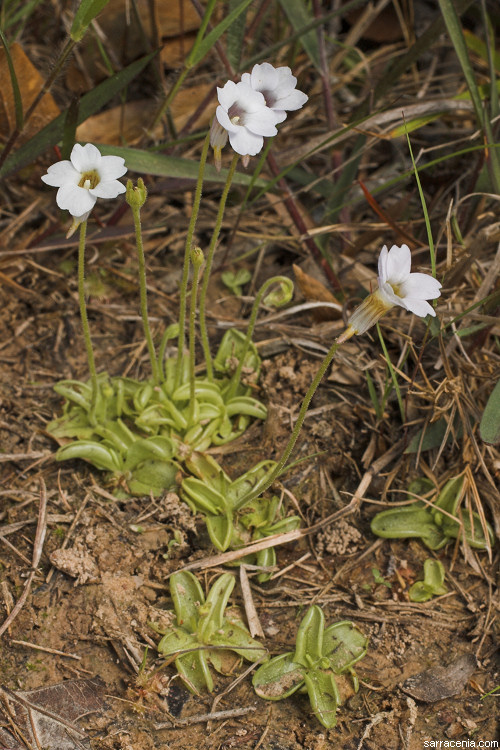
Pinguicula primuliflora
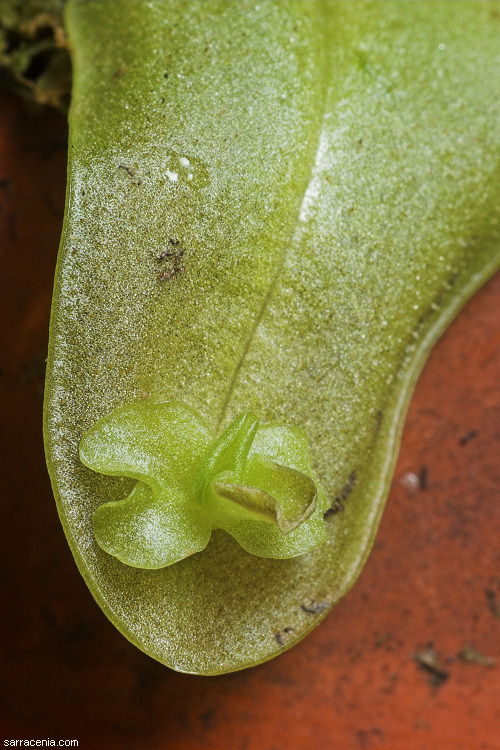
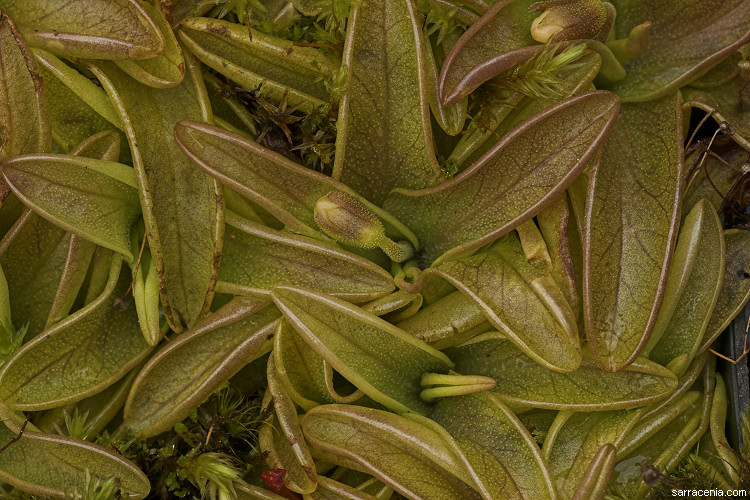
In the wild or when grown well, this plant
produces adventitious plantlets on its
leaves. It can be so prolific that the behavior rapidly becomes a nuisance! I have seen numerous photographs showing plants
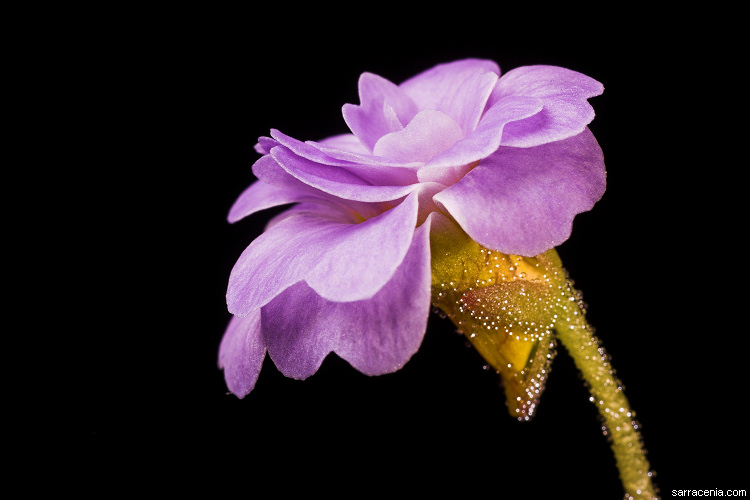
completely submerged in (seasonal?) streams in its native habitat. The selection P. primuliflora
'Rose' is double-flowered (i.e. it has many more petals than normal on a single flower).
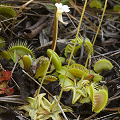 P. pumila
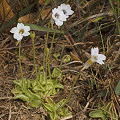 P. pumila
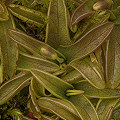
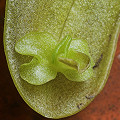 P. primuliflora
 P. primuliflora
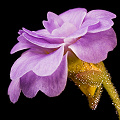 P. primuliflora 'Rose'
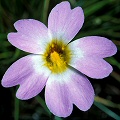 P. primuliflora
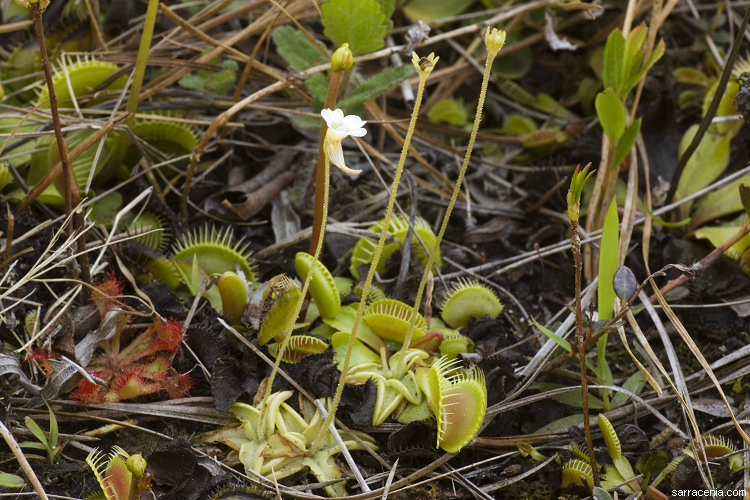
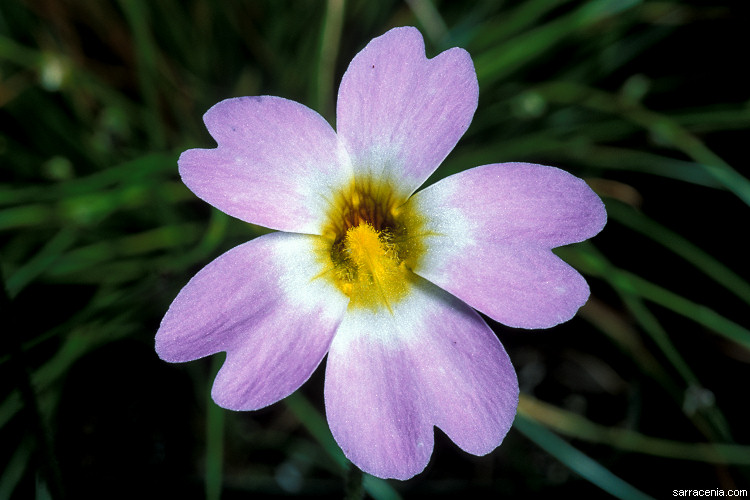
Pinguicula pumila
This diminutive species usually grows for only a year or so before dying, and in my
experience should cross-pollinated in order to obtain seed. (Self pollination results in plants that seem to be
weak.)
I have seen this plant in Texas, where the flowers were almost like those of P. agnata,
while those I have seen in South Carolina were smaller and less remarkable. I have only seen whitish-flowering and pale purple-flowering
plants, but
there are blue, deep purple, and yellow-flowering plants that I must see! I think these flower forms may be primarily restricted
to south-peninsular Florida, but I am not sure. The yellow plants have been given the name
P. pumila var. buswellii Moldenke.
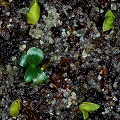 P. vulgaris
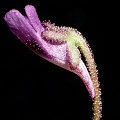 P. vulgaris
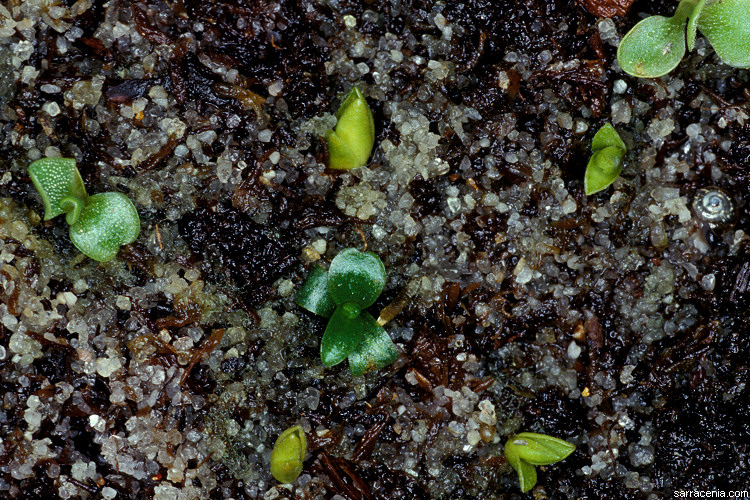
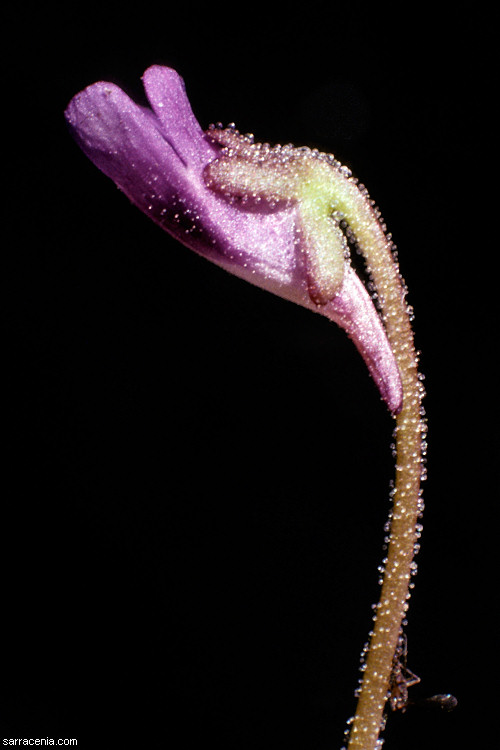
Pinguicula villosa
A remarkable, tiny species from the arctic. It is so small that only one or two leaves
are usually visible above the small tufts of Sphagnum. Even the flowers are tiny!
Pinguicula vulgaris
This species has an enormous range in arctic-temperate regions.
As I described above, it is very
similar to P. macroceras. For a critical discussion of these two species, refer to
Schnell (2002a). Surprisingly, I have never seen this species in the wild.
Page citations: Casper, J. 1966; Folkerts, G.W. & Freeman, J.D. 1989;
Godfrey, R.K., & Wooten, J.W. 1981; Lamb, R. 1991; Moldenke, H.N. 1934; Lampard, S. et al. 2016;
Rice, B. 2006a, 2011c; Roccia, A. et al. 2016;
Rondeau, H. 1991; Schlauer, J. 2002; Schnell, D.E. 1976, 2002a; Steiger, J. & Rondeau, H. 1997;
US Fish & Wildlife Service, 1973.


