Q: Carnivorous plants of mainland Asia and Japan--amazing diversity...
A:
The native carnivorous genera in this region are Aldrovanda, Drosera,
Nepenthes, Pinguicula, and Utricularia.
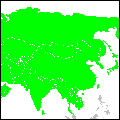
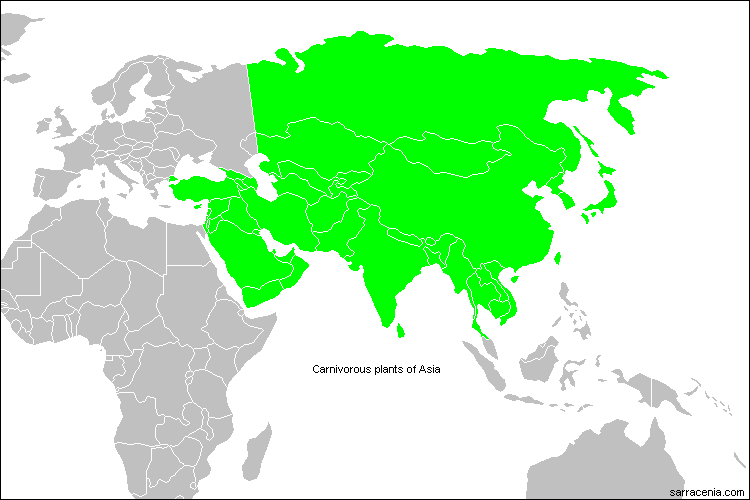
This page treats all of mainland Asia. Borderline
Eurasian countries (Georgia, Azerbaijan, Armenia, Kazakhstan, and Russia) are included both here and on
the carnivorous plants of Europe page; Cyprus and Turkey are treated as being Asian. Also included
are the islands of Japan and Taiwan, although other island nations are treated in my Southeast Asia page (in development).
Finally, while I include Thailand, I treat Peninsular Malaysia and Singapore on the Southeast Asia page.
Aldrovanda
Aldrovanda vesiculosa
is probably in the same state of decline in Asia as it is in Europe. Historical records indicate the plant has occurred in
Russia, Kazakhstan, Uzbekistan, Bangladesh, China (Heilongjiang), North Korea, and Japan. However, other than its occurrence in
one pond in Japan, I am not sure of its current extent.
Nepenthes
The majority of the species in this genus occurs on the island nations of Southeast Asia, but a few occur in the
regions treated on this page. Below I list the species and their ranges in mainland
Asia; a few are endemic to this area, the others have ranges that extend beyond the region discussed on this page:
- N. ampullaria: Thailand.
- N. anamensis: Cambodia, Thailand, and Vietnam (endemic).
- N. bokorensis: Cambodia (endemic).
- N. distillatoria: Sri Lanka (endemic).
- N. gracilis: Thailand.
- N. khasiana: India (endemic).
- N. mirabilis: Thailand, Vietnam, Laos, Cambodia, and China.
- N. thorelii: Vietnam, and also possibly Cambodia and Thailand (endemic).
Pinguicula
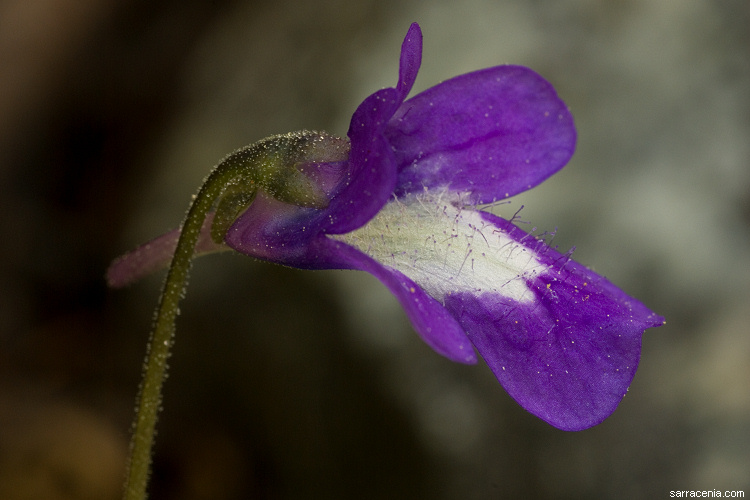
A few Pinguicula occur in this region. A few species are even endemic to Asia:
- P. algida (endemic): Russia.
- P. alpina: Russia, India, Nepal, and China.
- P. crystallina (endemic): Cyprus and Turkey.
- P. hirtiflora: Turkey.
- P. macroceras: Russia.
- P. ramosa (endemic): Japan.
- P. variegata (endemic): Russia.
- P. villosa: Russia, China, and North Korea.
- P. vulgaris: Russia.
Drosera
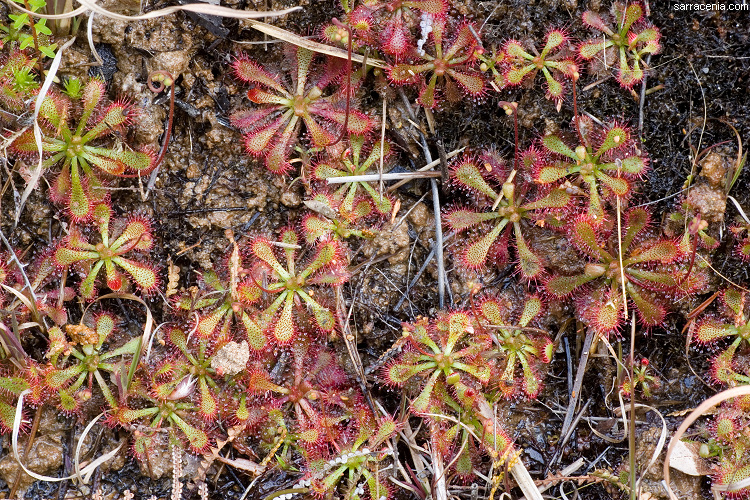
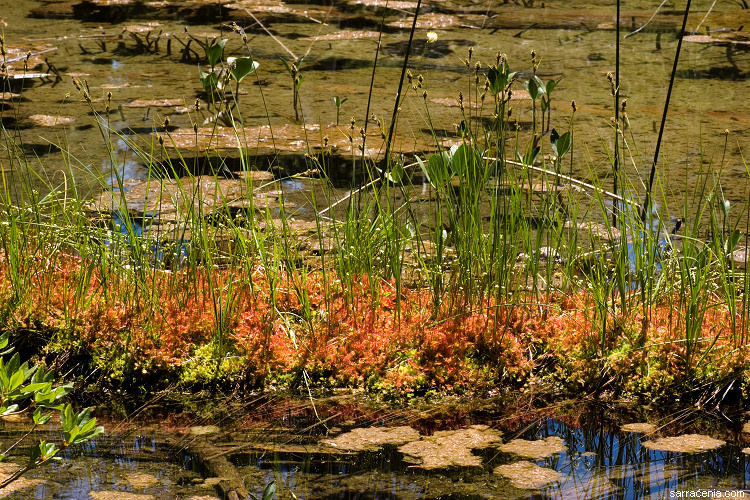
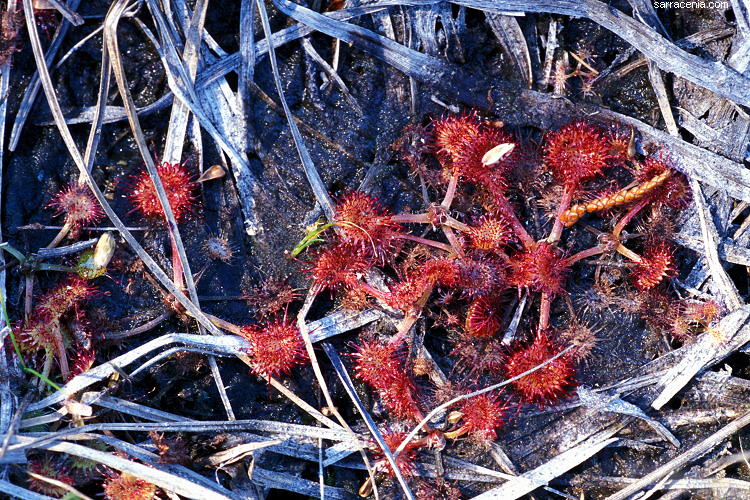
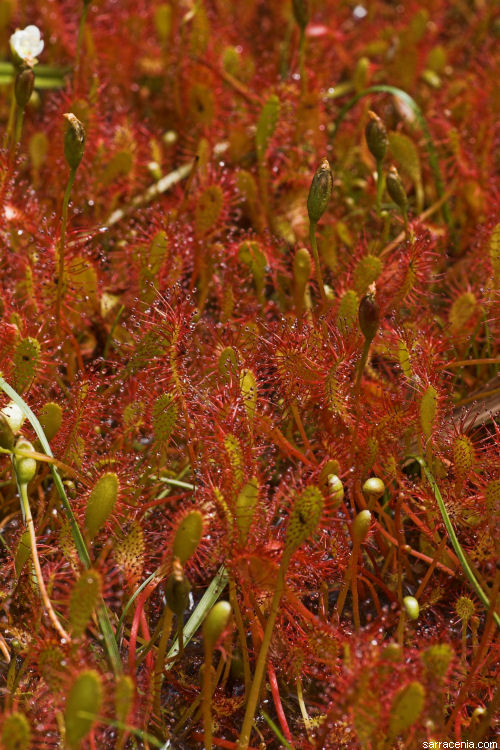
The genus Drosera is represented in Asia by the following species; from this list
D. oblanceolata and D. tokaiensis are Asian
endemics:
- D. anglica: Russia, Georgia, Mongolia, China, North Korea, and Japan.
- D. burmannii: Sri Lanka, Myanmar, Thailand, China, Japan, and Taiwan.
- D. indica: India, Sri Lanka, China, Taiwan, Japan, Myanmar, Vietnam, and Thailand.
- D. oblanceolata: China and Hong Kong.
- D. peltata: Sri Lanka, China, Nepal, Thailand, Taiwan, and Japan.
- D. rotundifolia: Russia, Georgia, Mongolia, Israel, South Korea, and Japan.
- D. spatulata: China, Taiwan, and Japan.
- D. tokaiensis: Japan.
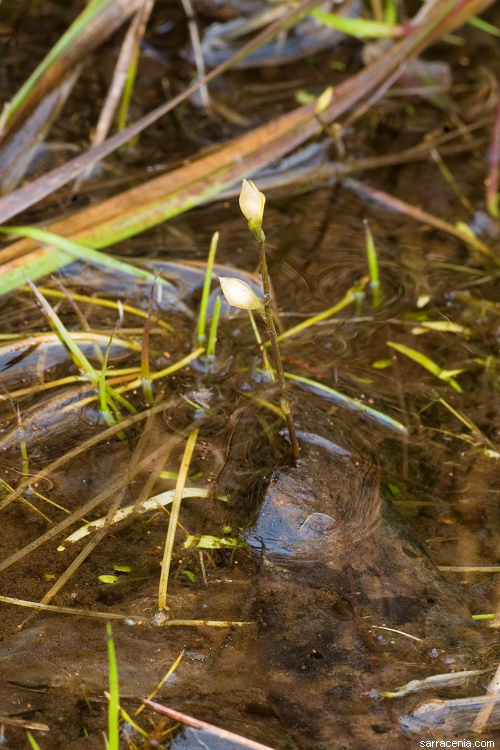
Utricularia
uliginosa
Utricularia
macrorhiza
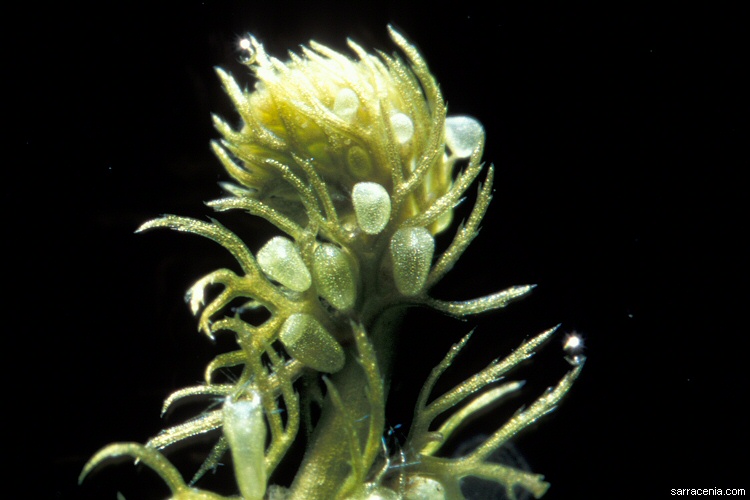
Utricularia
intermedia
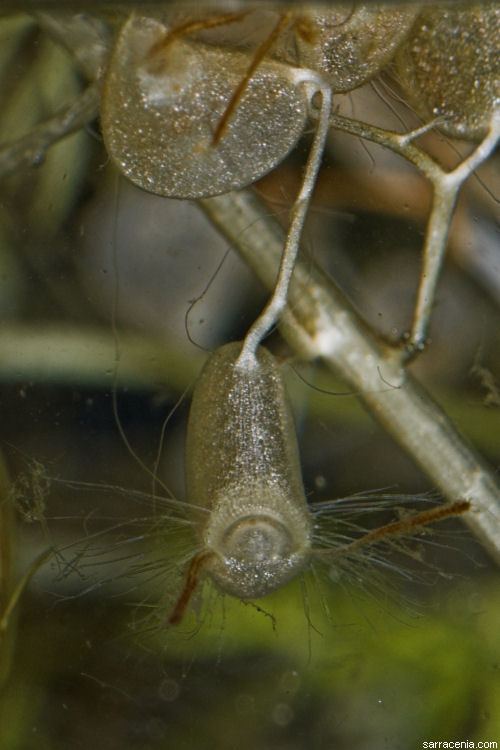
Utricularia
dimorphantha
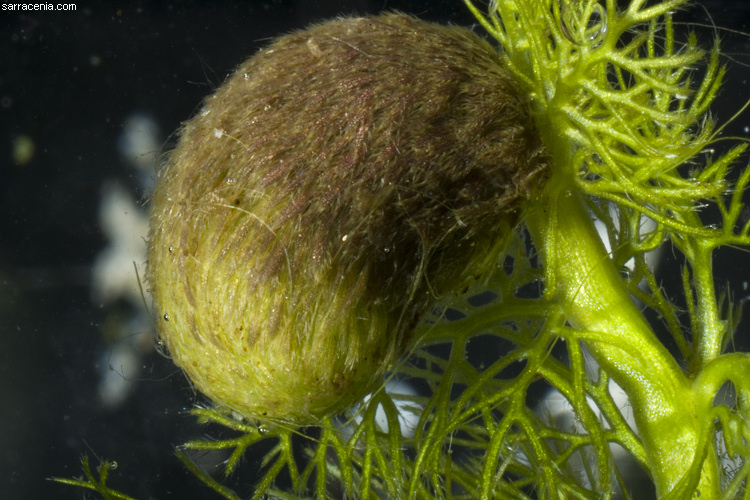
Utricularia
aurea
Utricularia
The genus Utricularia really shows off in Asia, and is represented by the species in
the list below. Some of these species are highly underdocumented and may be quite rare. Those that
are endemic to the Asian region treated on this page are indicated as such:
- U. albocaerulea (endemic): India.
- U. arcuata (endemic): India.
- U. arenaria: India.
- U. aurea: Pakistan, India, Nepal, Bangladesh, Sri Lanka, Myanmar, Thailand, Laos, Cambodia, Vietnam, China, Taiwan, North Korea, South Korea, and Japan.
- U. australis: Russia, Iraq, Iran, Yemen, Afghanistan, Pakistan, India, Sri Lanka, Myanmar, Nepal, Bhutan, China, Taiwan, North Korea, South Korea, and Japan.
- U. babui (endemic): India and Thailand.
- U. bifida: India, Nepal, Bangladesh, Sri Lanka, Myanmar, China, Taiwan, North Korea, South Korea, Japan, Thailand, Vietnam, Laos, and Cambodia.
- U. bosminifera (endemic): Thailand.
- U. brachiata (endemic): India, Nepal, Bhutan, Myanmar, and China.
- U. bremii: Russia and Japan.
- U. caerulea: India, Bangladesh, Myanmar, Sri Lanka, Nepal, Thailand, Cambodia, Laos, Vietnam, Russia, China, North Korea, South Korea, and Japan.
- U. cecilii (endemic): India.
- U. christopheri (endemic): Nepal.
- U. corynephora (endemic): Myanmar and Thailand.
- U. delphinioides (endemic): Thailand, Laos, Vietnam, and Cambodia.
- U. dimorphantha (endemic): Japan.
- U. forrestii (endemic): China, and Myanmar.
- U. foveolata: India, Bangladesh, China, and Thailand.
- U. furcellata (endemic): India and Nepal.
- U. garrettii (endemic): Thailand.
- U. geoffrayi (endemic): Thailand, Cambodia, and Vietnam.
- U. gibba: Israel, India, Nepal, Sri Lanka, Myanmar, Thailand, Vietnam, China, Taiwan, and Japan.
- U. graminifolia (endemic): India, Sri Lanka, Myanmar, Thailand, and China.
- U. hirta: India, Sri Lanka, Thailand, Laos, Vietnam, and Cambodia.
- U. inflexa: India.
- U. intermedia: Russia, Georgia, Kazakhstan, China, North Korea, South Korea, and Japan.
- U. inthanonensis (endemic): Thailand.
- U. involvens: Myanmar and Thailand.
- U. jackii (endemic): Thailand.
- U. kumaonensis (endemic): India, Nepal, Bhutan, Myanmar, and China.
- U. lazulina (endemic): India.
- U. limosa: China, Thailand, Laos, and Vietnam.
- U. macrorhiza: Russia, Mongolia, China, and Japan.
- U. malabarica (endemic): India.
- U. mangshanensis (endemic): China.
- U. minor: Russia, Turkey, Iran, Afghanistan, India, Nepal, Bhutan, China, Myanmar, and Japan.
- U. minutissima: India, Sri Lanka, Myanmar, Thailand, Laos, Vietnam, Cambodia, China, and Japan.
- U. moniliformis (endemic): Sri Lanka.
- U. multicaulis (endemic): India, Nepal, Bhutan, Myanmar, and China.
- U. ochroleuca: Russia, Afghanistan, and Japan.
- U. odorata: Thailand, Laos, Vietnam, and Cambodia.
- U. peranomala (endemic): China.
- U. phusoidaoensis (endemic): Thailand.
- U. pierrei (endemic): Vietnam; possibly Thailand and Cambodia.
- U. polygaloides (endemic): India and Sri Lanka.
- U. praeterita (endemic): India.
- U. pubescens: India.
- U. punctata: China, Thailand, Vietnam, and Myanmar.
- U. recta (endemic): India, Nepal, Bhutan, and China.
- U. reticulata (endemic): India and Sri Lanka.
- U. salwinensis (endemic): China.
- U. scandens: India, Bangladesh, Sri Lanka, Nepal, Myanmar, Thailand, Vietnam, and China.
- U. smithiana (endemic): India.
- U. spinomarginata (endemic): Thailand.
- U. stellaris: India, Bangladesh, Sri Lanka, Nepal, Myanmar, and Vietnam.
- U. striatula: India, Nepal, China, Taiwan, Bhutan, Myanmar, Thailand, and Vietnam.
- U. subulata: India and Thailand.
- U. subramanyamii (endemic): India.
- U. uliginosa: India, Sri Lanka, Myanmar, Thailand, Vietnam, China, Taiwan, North Korea, South Korea, and Japan.
- U. vulgaris: Russia, Azerbaijan, Syria, Turkey, Afghanistan, Pakistan, and China.
- U. warburgii (endemic): China.
- U. wightiana (endemic): India.
Page citations: Breckpot, C. 1997; Casper, J. 1966; Rice, B.A. 2006a; Schlauer, J. 2002; Taylor, P. 1989.