Q: Carnivorous plants of Europe--exciting Pinguicula!
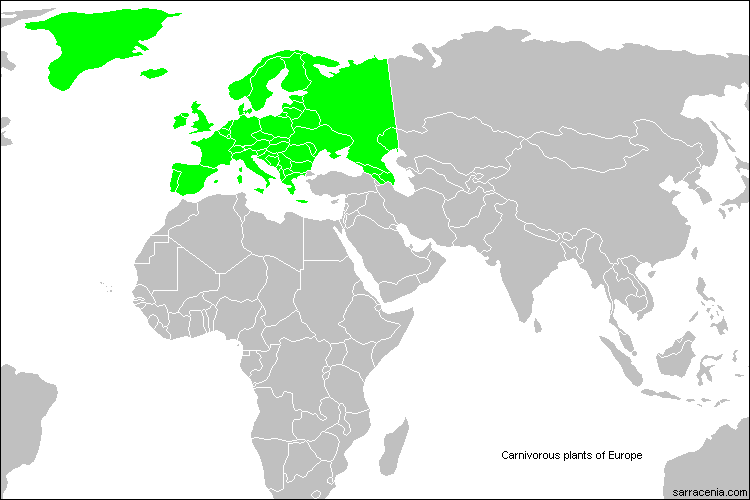
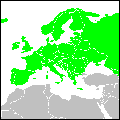
A: In Europe,
the native carnivorous plants are represented by Aldrovanda, Drosera,
Drosophyllum, Pinguicula, and Utricularia.
The only endemic European carnivorous plants are in the genus Pinguicula.
The countries with the most carnivorous species are France and Spain (about 17 species each), meanwhile in terms of genus
diversity, Hungary, Poland, Romania, Russia, and Spain lead with four genera each.
Below I list the European species.
In some cases the classification of a country as "European" or "Asian" is a matter of perspective. I
treat the borderline countries (Georgia, Azerbaijan,
Armenia, Kazakhstan, and Russia) on both this and the
carnivorous plants of Asia page; Cyprus and Turkey are treated as being Asian.
I observe political borders and treat Greenland as European.
Aldrovanda
Historically Aldrovanda vesiculosa
was found in many parts of Europe; an inventory of countries from the late 1800s includes France, Switzerland,
Germany, Poland, Czechoslovakia, Austria, Hungary, Romania, Belarus, Baltic, Ukraine, Russia, Italy, Yugoslavia, and Bulgaria.
Currently it is only found in
Hungary, Poland, Romania, Yugoslavia, Ukraine, and Russia. (Introduced populations occur in Switzerland.) Its broad decline in
range and number of sites is due to human activity--habitat destruction and degradation.
Drosophyllum
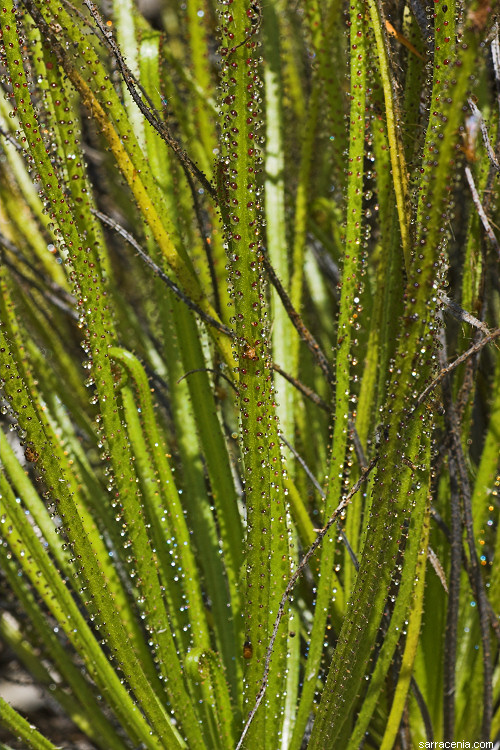
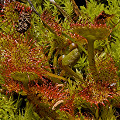
Drosophyllum lusitanicum is almost a European endemic, as the vast number
of sites for this plant are in Portugal and Spain. However, a few plants are also found in Morocco.
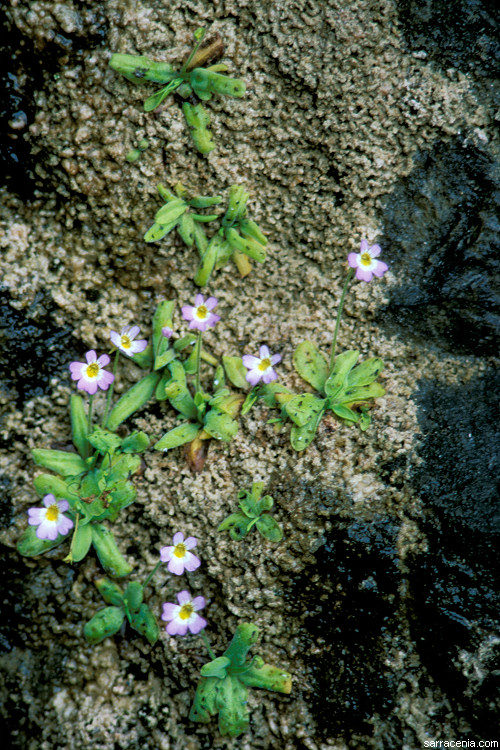
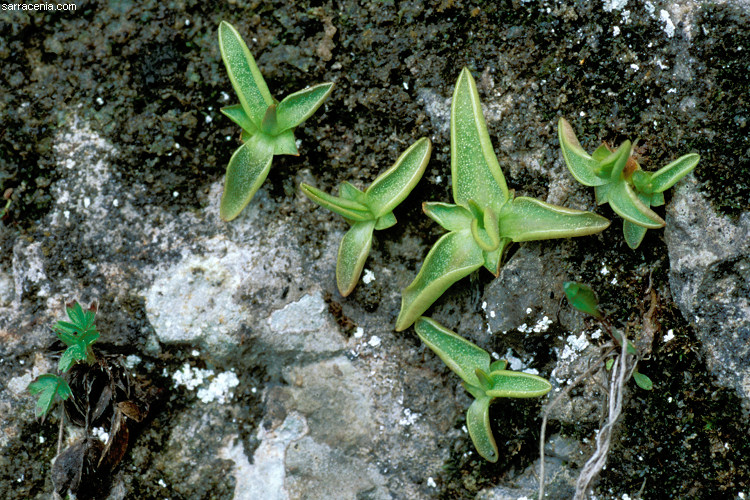
Pinguicula
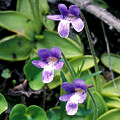
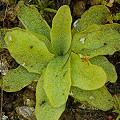
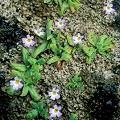
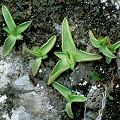
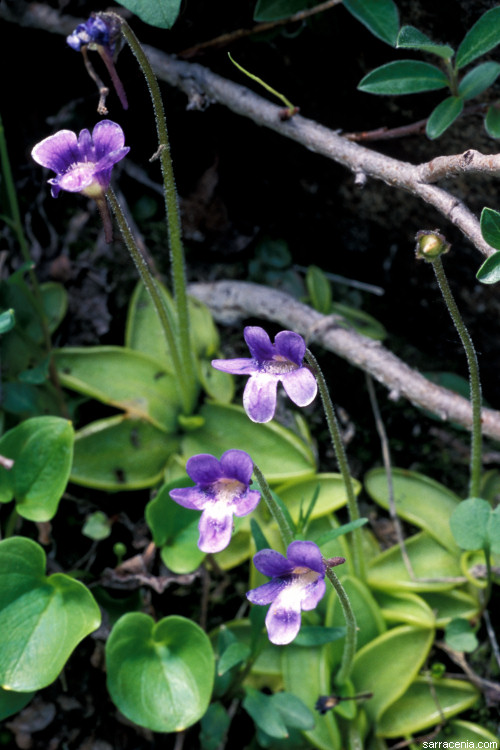
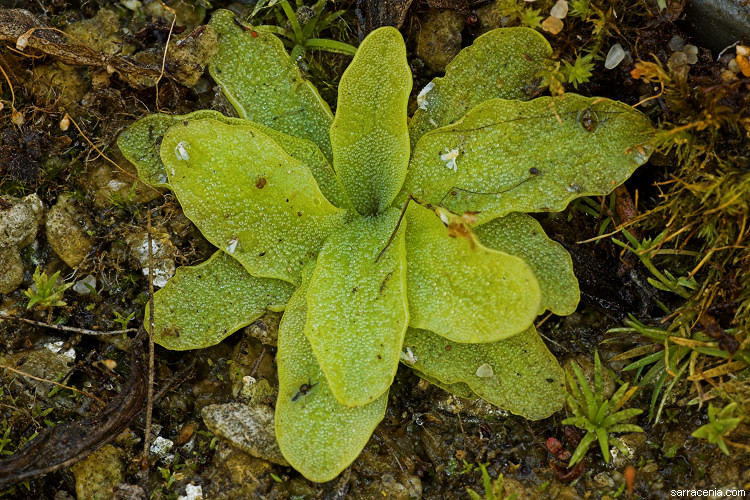
Europe's big claim to fame is its interesting set of Pinguicula species. While not as large as
the list of species in México, it is still impressive. The species are given below with their
European ranges; the species endemic to Europe are indicated as such, the others have ranges that extend beyond Europe:
- P. algida (endemic): Russia.
- P. alpina: Spain, France, Switzerland, Austria, Italy, Slovenia, Germany, Poland, Slovak Republic, Romania, Norway, Sweden, Finland, and Russia.
- P. apuana (endemic): Italy.
- P. balcanica (endemic): Bosnia/Herzegovina, Yugoslavia, Macedonia, Albania, Greece, and Bulgaria.
- P. corsica (endemic): Corsica (France).
- P. fiorii (endemic): Italy.
- P. grandiflora (probably endemic): Ireland, Spain, France, and Switzerland.
- P. hirtiflora (endemic): Italy, Albania, Bosnia/Herzegovina, Greece, and Macedonia.
- P. leptoceras (endemic): Switzerland, Austria, Italy, and France.
- P. longifolia (endemic): Spain, France, Italy.
- P. louisii (endemic): Albania.
- P. lusitanica: United Kingdom, France, Portugal, and Spain.
- P. macroceras: Russia.
- P. mariae: Italy.
- P. mundi (endemic): Spain.
- P. nevadensis (endemic): Spain.
- P. poldinii (endemic): Italy.
- P. vallisneriifolia (endemic): Spain.
- P. vallis-regiae: Italy.
- P. variegata (endemic): Russia.
- P. villosa: Sweden, Norway, Finland, and Russia.
- P. vulgaris: Iceland, Foroyar, Ireland, United Kingdom, Norway, Sweden, Finland, Russia, Denmark, Belgium, The Netherlands, Germany, Poland, Czech Republic, Slovak Republic, France, Switzerland, Liechtenstein, Austria, Hungary, Romania, Portugal, Spain, Italy, Slovenia, and Croatia.
Drosera
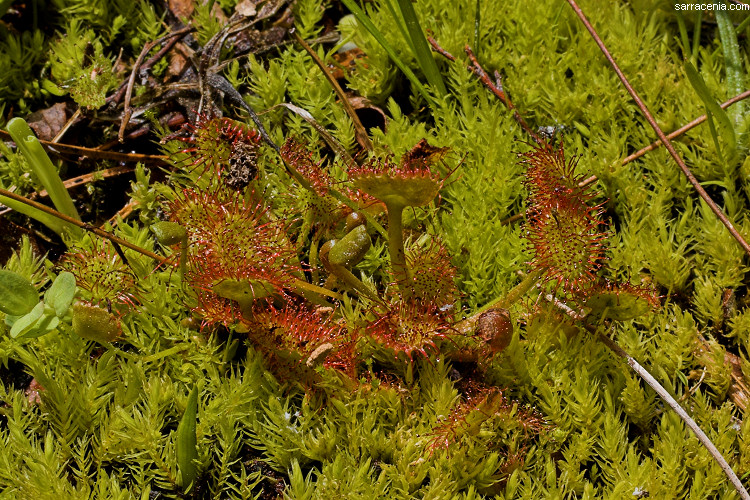
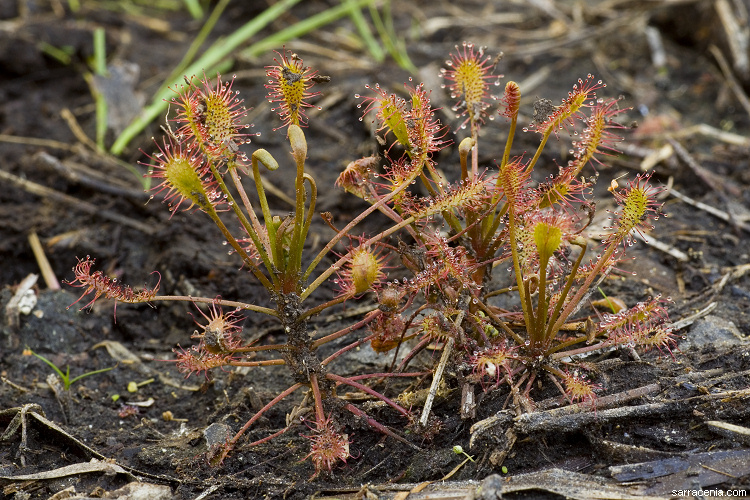
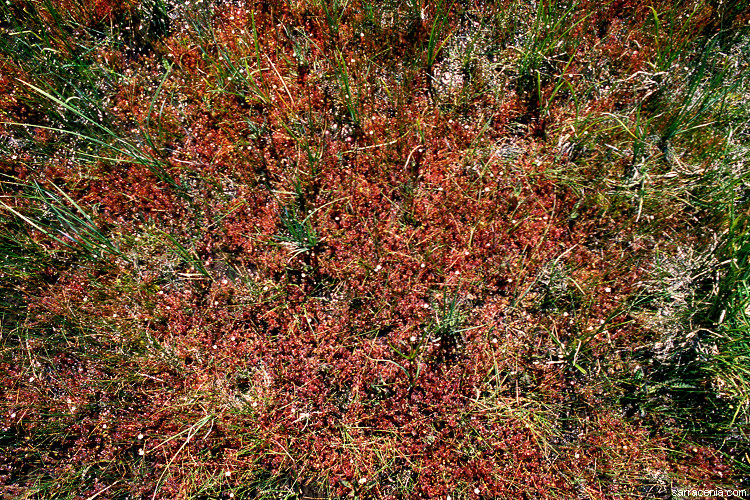
The genus Drosera is represented by only three wide-ranging species, none of which are European
endemics:
- D. anglica: Ireland, United Kingdom, Norway, Sweden, Finland, Denmark, Belgium, The Netherlands, Germany, Poland, Czech Republic, Slovak Republic, France, Spain, Switzerland, Liechtenstein, Austria, Hungary, Romania, Italy, Macedonia, Estonia, Latvia, Lithuania, Belarus, Ukraine, Russia, and Georgia.
- D. intermedia: Ireland, United Kingdom, Norway, Sweden, Finland, Estonia, Latvia, Lithuania, Belarus, Ukraine, Russia, Georgia, Denmark, Belgium, The Netherlands, Germany, Poland, Czech Republic, Slovak Republic, France, Switzerland, Liechtenstein, Austria, Italy, Slovenia, Croatia, Romania, Portugal, and Spain.
- D. rotundifolia: Ireland, United Kingdom, Norway, Sweden, Finland, Denmark, Belgium, The Netherlands, Germany, Poland, Czech Republic, Slovak Republic, France, Spain, Switzerland, Liechtenstein, Austria, Hungary, Romania, Italy, Macedonia, Estonia, Latvia, Lithuania, Belarus, Ukraine, Russia, and Georgia
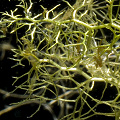
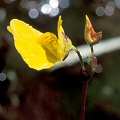
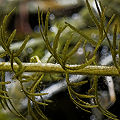
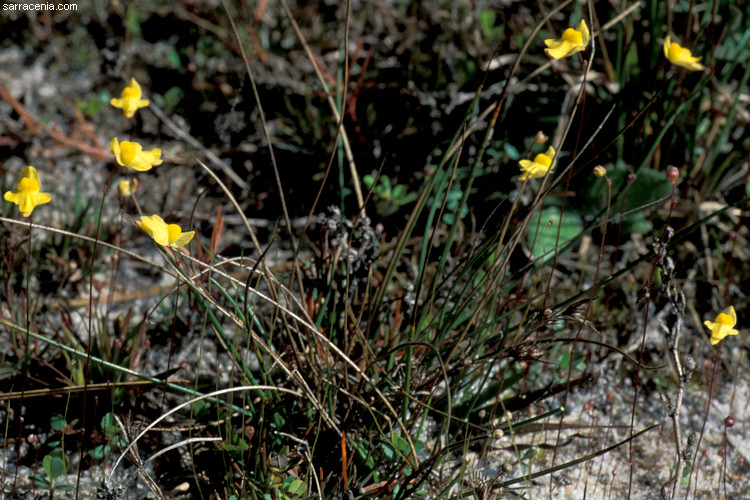
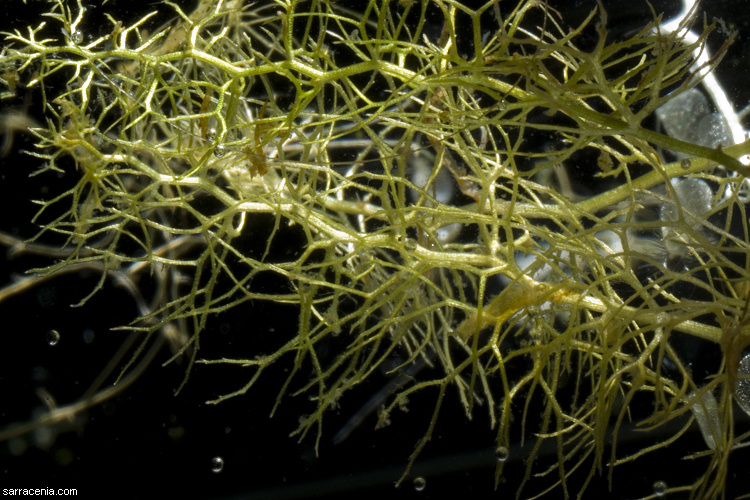
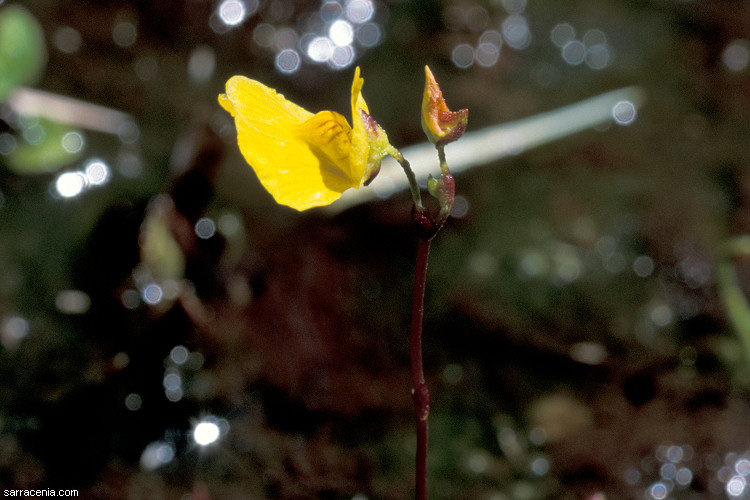
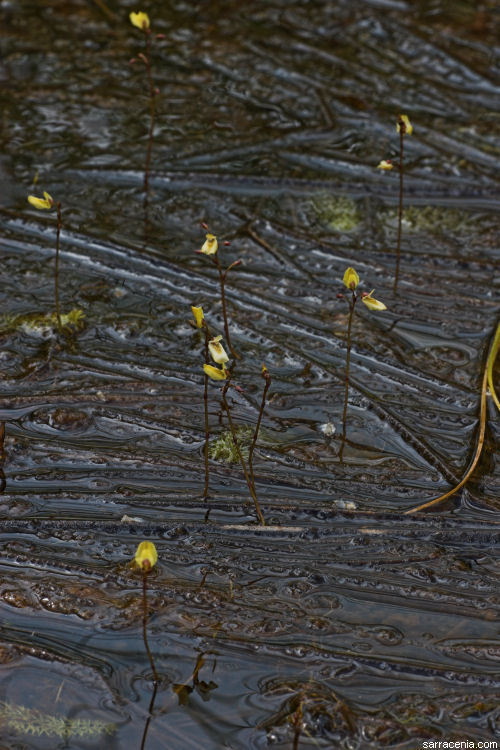
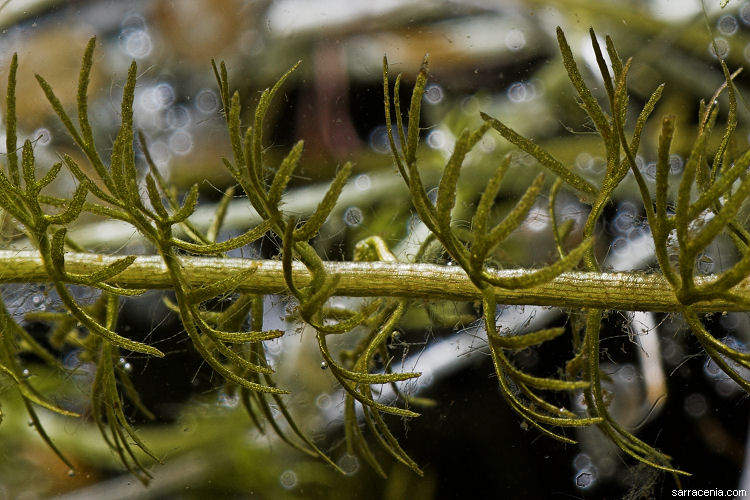
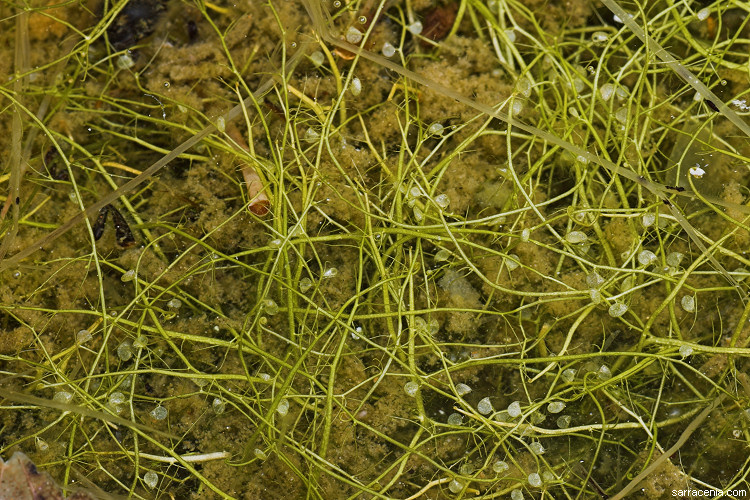
Utricularia
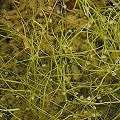
subulata
Utricularia
stygia
Utricularia
ochroleuca
Utricularia
minor
Utricularia
intermedia
Utricularia
gibba
Utricularia
All the species in Europe are from the genus section Utricularia, except
for U. subulata from section Setiscapella.
The species U. bremii is almost endemic, except for the occurrence of this plant in Japan.
- U. australis: Ireland, United Kingdom, France, Spain, Portugal, Belgium, The Netherlands, Germany, Denmark, Norway, Sweden, Finland, Russia, Poland, Czech Republic, Slovak Republic, Hungary, Switzerland, Italy, Slovenia, Croatia, Yugoslavia, Romania, and Bulgaria.
- U. bremii: Belgium, Denmark, France, Switzerland, Italy, Germany, Czech Republic, Slovak Republic, Hungary, Ukraine, and Russia; possibly also Ireland and the United Kingdom.
- U. gibba: Portugal, Spain; introduced into the United Kingdom and Hungary.
- U. intermedia: Greenland, Ireland, United Kingdom, Norway, Sweden, Finland, Belgium, The Netherlands, Denmark, Germany, Poland, France, Switzerland, Italy, Austria, Czech Republic, Slovak Republic, Croatia, Yugoslavia, Romania, Ukraine, Russia, and Georgia; also possibly Kazakhstan.
- U. minor: Greenland, Iceland, Ireland, United Kingdom, Norway, Sweden, Finland, Estonia, Latvia, Lithuania, Russia, Belgium, The Netherlands, Denmark, Germany, Poland, Czech Republic, Slovak Republic, Austria, Hungary, Romania, Bulgaria, Spain, France, Switzerland, Italy, Slovenia, Croatia, Bosnia/Herzegovina, Yugoslavia, Albania, and Greece.
- U. ochroleuca: Greenland, Ireland, United Kingdom, Norway, Sweden, Finland, Belgium, France, Germany, Denmark, and Russia; also possibly Poland.
- U. stygia: United Kingdom, Denmark, Norway, Sweden, Finland, Germany, Austria, Czech Republic, and the Slovak Republic.
- U. subulata: this species so common elsewhere is, in Europe, surprisingly only in Portugal.
- U. vulgaris: Ireland, United Kingdom, Belgium, The Netherlands, Denmark, Norway, Sweden, Finland, Russia, Georgia, Armenia, Azerbaijan, Germany, Poland, Czech Republic, Slovak Republic, France, Spain, Switzerland, Italy, Austria, Hungary, Slovenia, Croatia, Bosnia/Herzegovina, Yugoslavia, Macedonia, Romania, Bulgaria, Albania, and Greece.
Page citations: Ansaldi, M., and Casper, J. 2009; Breckpot, C. 1997; Casper, J. 1966; Correia, E. & Freitas, H. 2002; Rice, B.A. 2006a; Schlauer, J. 2002; Taylor, P. 1989.