Q: Where do pitcher plants (Darlingtonia and Sarracenia) live?
 Sarracenia
 Sarracenia &
Darlingtonia
A: Darlingtonia populations are restricted to the far west coast of
the USA, specifically the two states of California and Oregon. The vast majority of
the populations are found along the Pacific Ocean coast, from Oregon (Tillamook County) down
into Del Norte County, California. While coastal, don't expect to smell salt air at a
Darlingtonia site---the plants can be 60 km or further from the ocean.
In addition to the populations along the coast, there are a few inland California populations.
Fine Darlingtonia populations occur in the Trinity Alps, near the town of Mt. Shasta,
and even as
far inland as the Sierra Nevada, between Lake Almanor and Lake Tahoe. Reports of plants near Donner Lake,
in the Sierra Nevada,
have never been verified even though this area is extremely accessible and has been heavily studied.
Non-native populations of this plant occur elsewhere, of course, thanks to misguided horticultural experiments. Many plants have been
inserted into the Mendocino pygmy forest. They have also turned up in British Columbia!
One feature common
to the soils of
nearly all Darlingtonia sites is the presence of the mineral serpentine. This is not an absolute
requirement---at least one Darlingtonia site has no serpentine in it, but it is usually
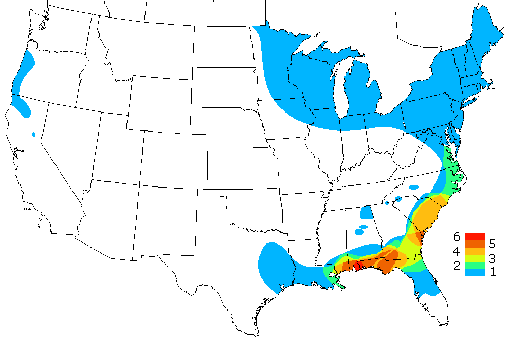
present. You can see its range in the
large map of the continental USA, indicated with blue on the
west coast. Click it for a closer view!
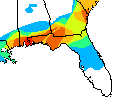
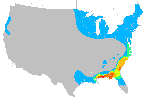
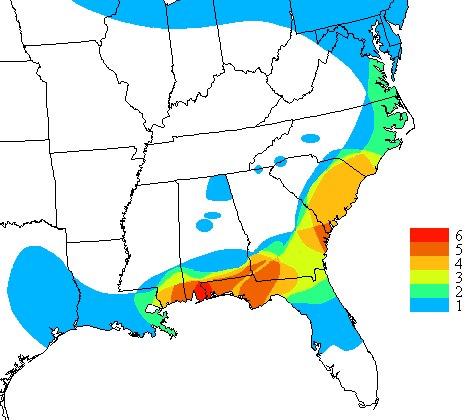
Sarracenia species are mostly found along the southeastern edge
of the USA, as you can see from the first map on this page. The
exception to this is Sarracenia purpurea, which ranges widely from the
Atlantic coastal plain of the USA, up along the east coast, into Maine and through Canada. Although I don't show it,
this species even gets to British Columbia. However, my understanding is that over this vast range, there are very few
occurrences of the plant. For more details on each species, refer to their individual FAQ profiles, immediately following
the Sarracenia species list.
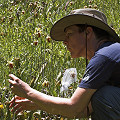 Darlingtonia,
California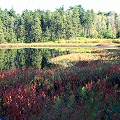 Sarracenia,
Massachusetts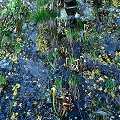 Darlingtonia,
California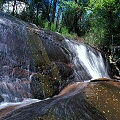 Sarracenia,
South Carolina
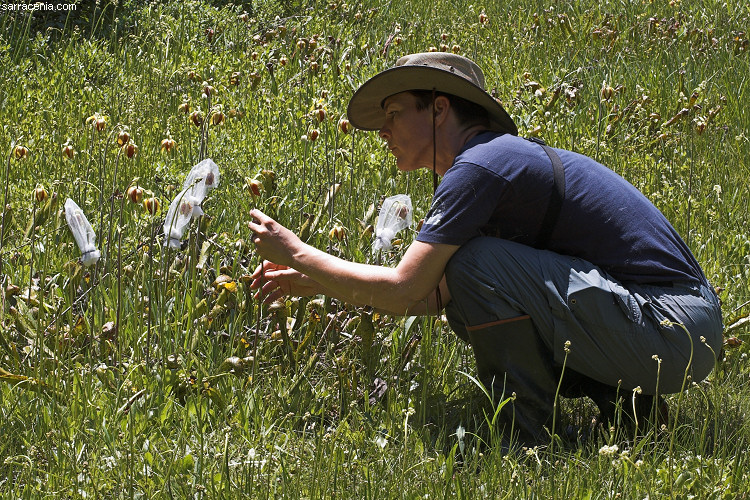
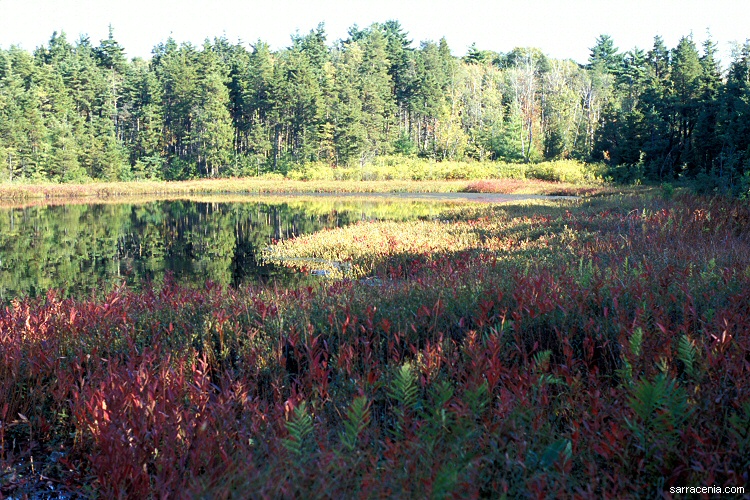
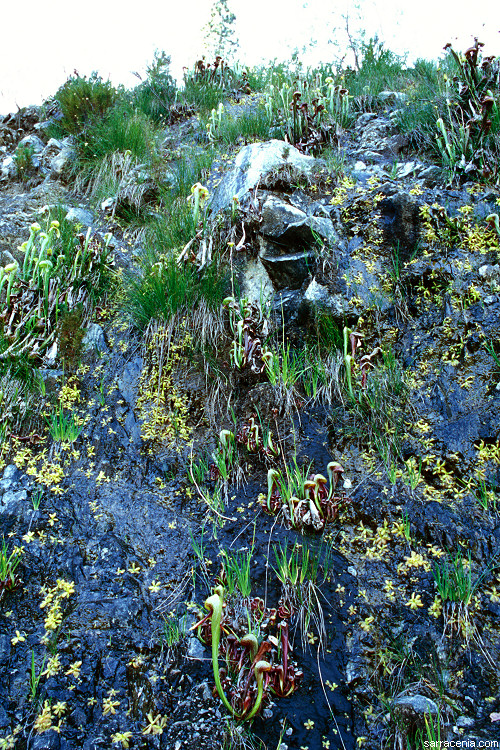
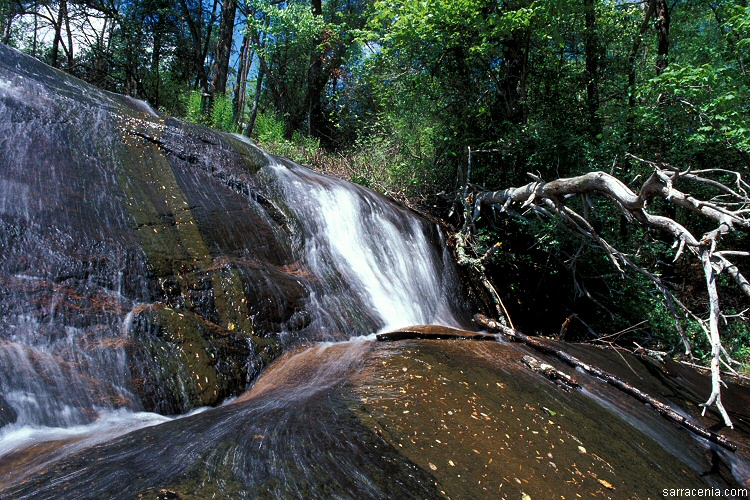
On the maps on this page, I have indicated the
presence of more than one species in overlapping ranges using a color
key, which is most easily seen in the close-up map. The numbers next to the color code indicate how many species are denoted
by each color. You can clearly see that the area of greatest species diversity is near Mobile, Alabama, where the red on my map
indicates that as many as six species are in the area.
Silly humans have introduced Sarracenia to many
places out of their ranges. I do not indicate these introductions.
I noticed with some interest that in his 2002 book, Don Schnell resorted to referring to ranges of plants as
"historical" ranges. This is very reasonable, since these marvelous pitcher plants have been eliminated from most of the
areas they once occurred in.
Finally, I would welcome authoritative corrections to my maps. For example, I'm not really sure that Sarracenia purpurea
ever occurred in Iowa, as I indicate.
Page citations: Juniper, B.E., et al. 1989; McPherson, S., and Schnell, D.E. 2011;
Rice, B.A. 2006a;
Schnell, D.E. 1976, 2002a; Teichreb, C. 2006; personal observation.


