Q: About Sarracenia alata, the pale pitcher plant
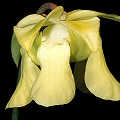 var. alata
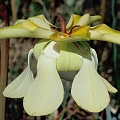 var. alata
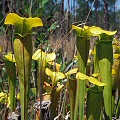 var. alata
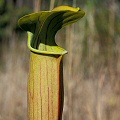 var. alata
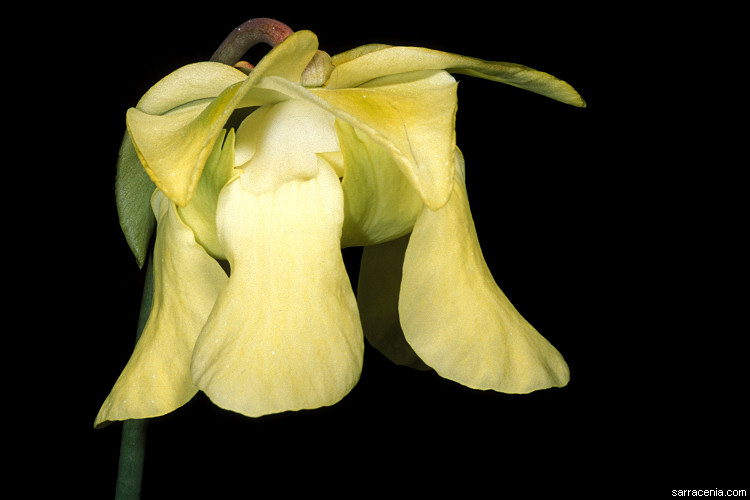
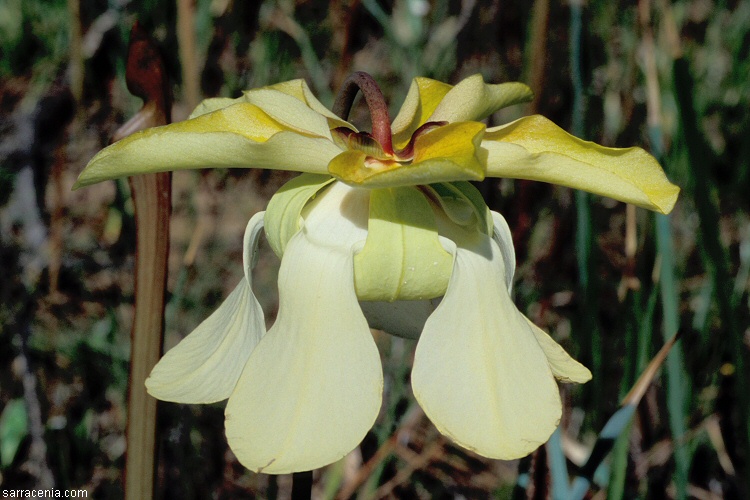
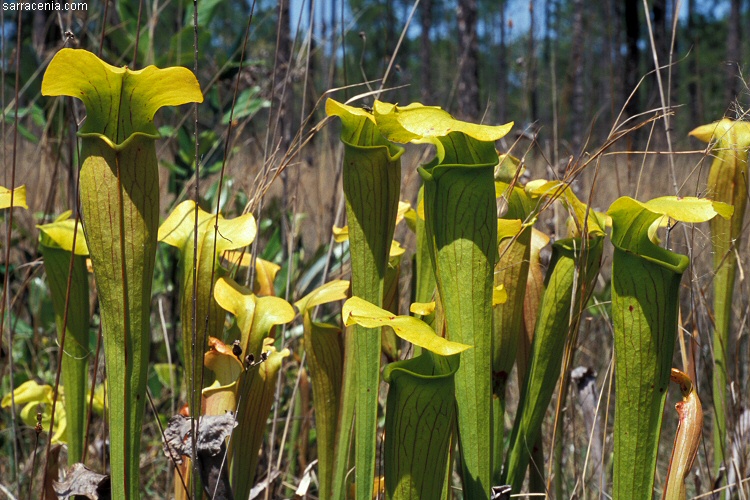
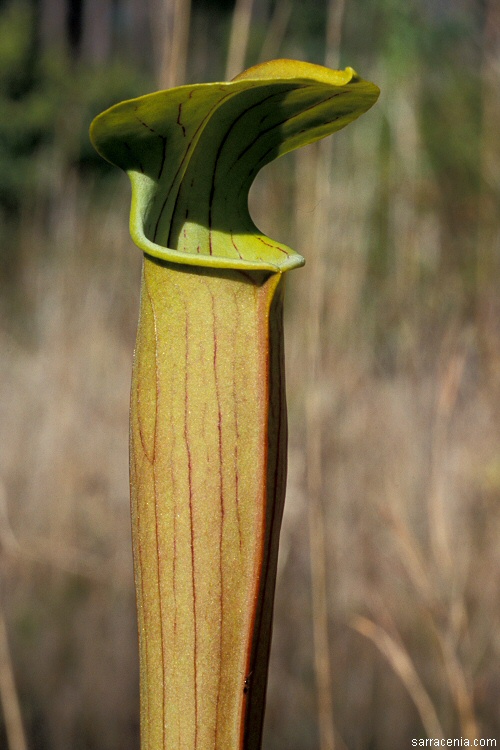
A: This species is called the "pale" pitcher plant because, well, over most of its range
the species is kind
of boring. Do not get me wrong---I love the plant and have spent countless hours admiring it in the field. But let us
face the truth squarely---many specimens of S. alata
are just a little on the dull side.
Even the name "Sarracenia alata" is somewhat uninteresting. It refers to the fact that each pitcher
bears an ala, which is the vertical flange that runs along the front of the pitcher. All Sarracenia species
have these, so it suggests desperation to name this plant after the structure.
Avoid using "yellow pitcher plant"
as a common name, because that invites confusion with Sarracenia flava (the Latin
flava means yellow.)
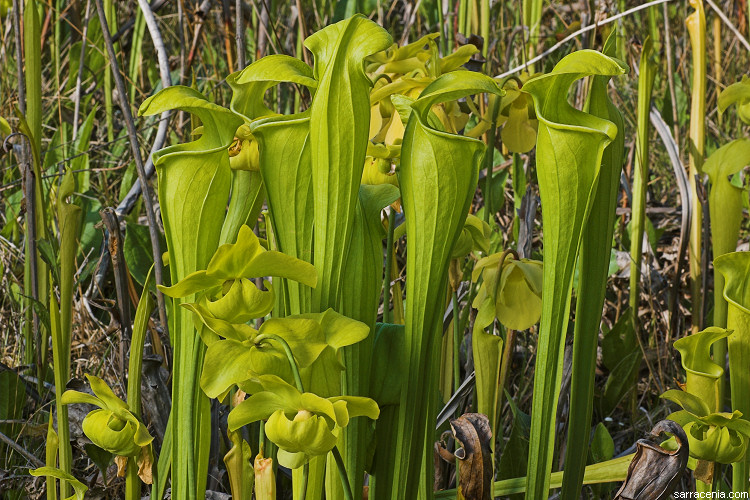
The pitchers are generally tall and erect, with a small lid. They have no amazing or interesting adaptations.
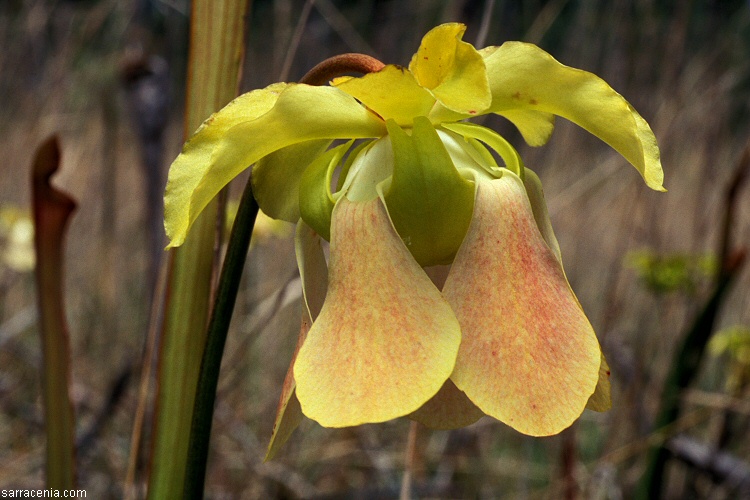
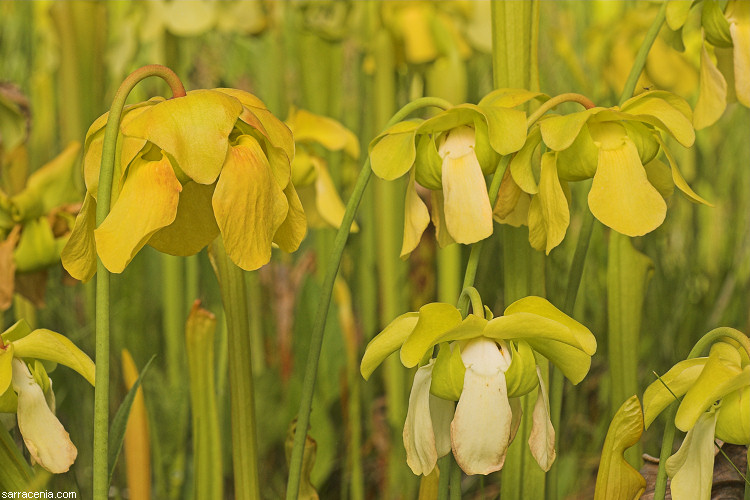
(Of course, in my opinion, just being a pitcher plant is a damned fine thing.) The flowers are a light color,
usually some kind of cream, greenish, or yellow. However, the occasional variant has extremely pale--even white--flowers, and I
have also encountered plants far west in Texas that had a bit of red in their petals. For these Texan plants, you cannot argue
effectively that hybridization with other species is an issue, because there are no other Sarracenia
species for hundreds of kilometers! Sarracenia alata flowers do not have a smell that I can detect,
although some authors claim to detect a number of subtle odors.
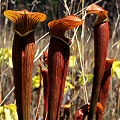 var. atrorubra
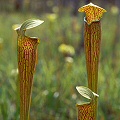 var. ornata
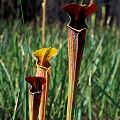 var. rubrioperculata
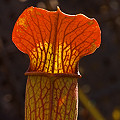 var. rubrioperculata
 Areolated
var. alata
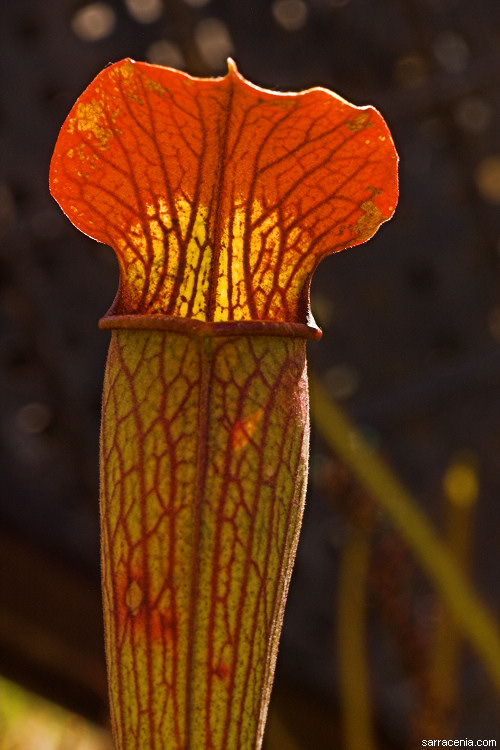
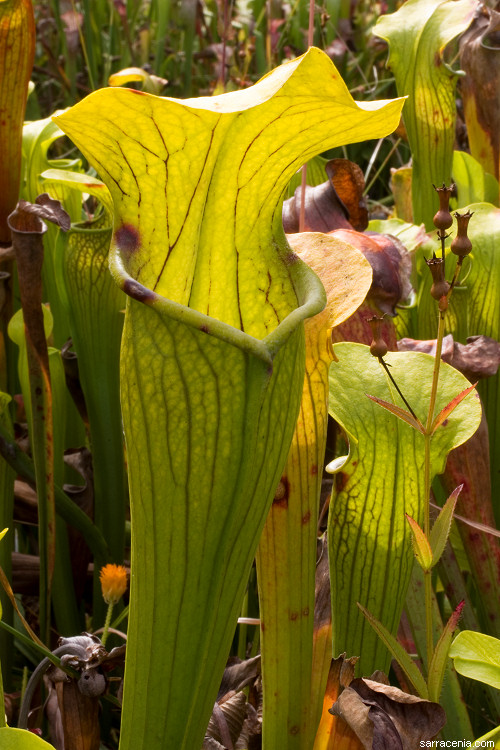
It is not always easy to distinguish S. alata from S. rubra or
S. alabamensis in
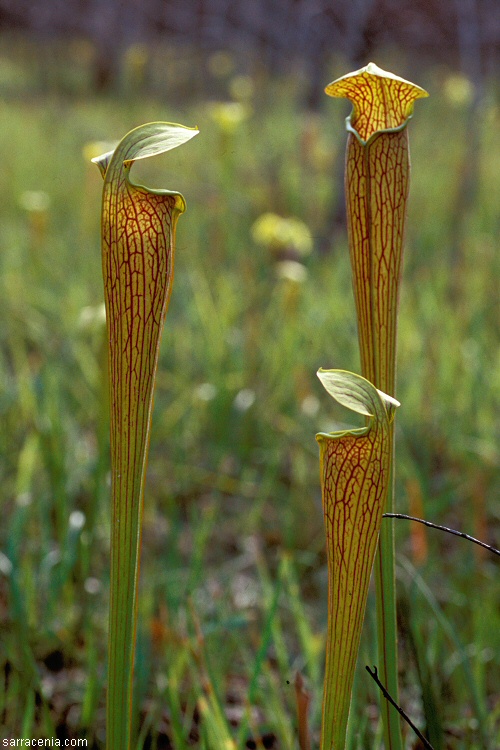
cultivation if they are not in flower. The key is to look at the nature of the pitcher venation. The veins of
S. rubra and S. alabamensis are reticulated---there are vertical veins but also many secondary veins connecting the
vertical veins---while the veins of S. alata are mostly (mostly!) just vertical pinstripes. This
is a matter of degree, and can be tricky at times to apply. I am sure that if you worked on it, you could find the
occasional plant that mimicked the other species, but my statements withstand scrutiny on the population level.
Range
I hasten to add that there are some really beautiful variants of S. alata. In Mississippi and
Louisiana I have seen deeply colored plants. Some have red lids, others have intensely red vertical veinings, and still others have
pitchers that are painted deep red or purplish-black. Many of these plants are really beautiful, and have been given Latin names. I really
cannot endorse these names, as there is no clear delineation of these plants into separate categories--they all just blend from
one to another. Furthermore, plants can seem to shift from one category to another as the pitchers age, or persist into a second year.
I TOTALLY respect Don Schnell's contributions to our understanding of carnivorous plants, but I cannot really agree with these categories.
Perhaps, if not of biological significance, the names give collectors something to write on the name tags in their pots.
Some clones have particularly
pubescent pitchers while others have pale windows (areolations). These have not been given Latin names.
Sarracenia alata var. alata
This is the typical plant. It is characterized by no or only light venation. Any venation is only on the pitcher interior. This plant
occurs in both east and west range segments. An anthocyanin-free form has been discovered in Washington County, Alabama, and it
is called Sarracenia alata var. alata f. viridescens.
Sarracenia alata var. atrorubra
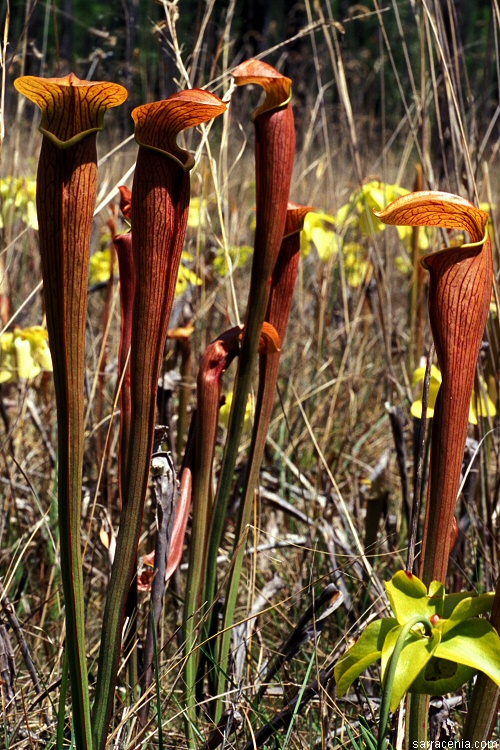
Nearly the entire pitcher is scarlet to maroon. Dark veining may be present on the interior pitcher or lid. This variety is
found only in the eastern range.
Sarracenia alata var. cuprea
This is analogous to the copper-top variety of Sarracenia flava. This is such a minor variation I am pretty
astonished that it has been given a varietal name.
Found only in the eastern range.
Sarracenia alata var. nigropurpurea
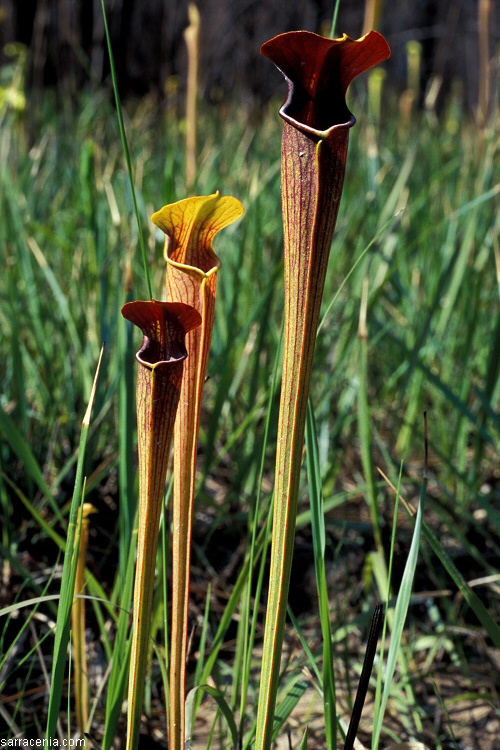
Similar to var. atrorubra, except in this case the pitcher is purplish to black. It is said that this is the only
Sarracenia that develops such a dark color. However, man, I would be really hard-pressed to distinguish this plant
from Sarracenia alata var. atrorubra. The cultivar
S. alata 'Night' is a selection of this variety. It grows only in
the eastern range.
Sarracenia alata var. ornata
This is covered with intricate venation on the outer and even inner parts of the tube. Unlike other varieties, the venation is
not just vertical pinstriping--it is reticulate. As most other varieties, it is only in the eastern range.
Sarracenia alata var. rubrioperculata
This is the famous "cut-throat" variety, that is bright red on the underside of the lid. Specimens of
"var. atrorubra" plants usually exhibit this color pattern, before they fill in the whole pitcher with dark
pigmentation.
Again, it is only in the eastern range.
 In cultivation
 Mississipii
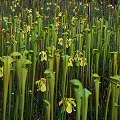 Mississipii
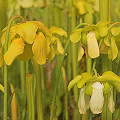 Texas
Texas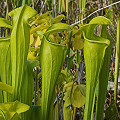 Texas
Texas
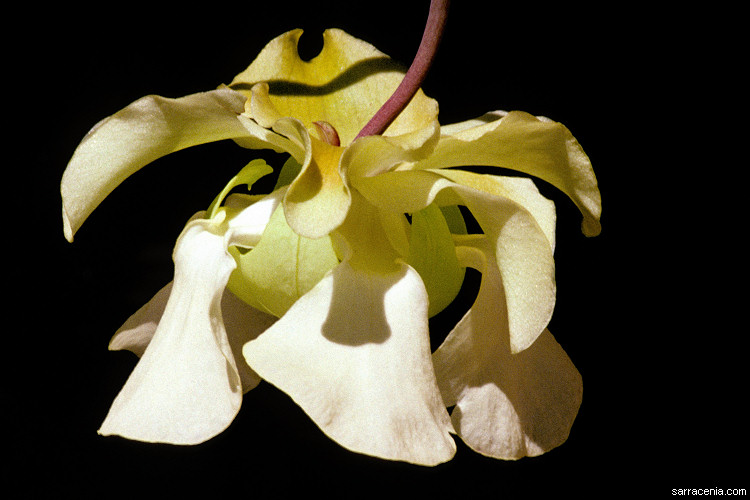
Range
States: Texas, Louisiana, Mississippi, Alabama. (Claims for Georgia are apparently anecdotal)
Sarracenia alata occurs in two broad areas that do not communicate with each other. The
western range is mostly in Texas, where it occured in widely separated sites in eleven counties (down from fifteen).
I have seen plants
in Tyler, Jasper, and Angelina Counties, and maybe a few more. The western range also includes five parishes in western Louisiana.
All told, as of 1989 there were 85 sites for S. alata in the western portion of its range.
I have seen some
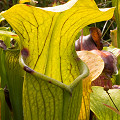
strange variant plants in Texas: plants with strangely shaped pitchers, for example. Plants with pale, semi-tranparent
patches (areoles) have also been spotted in Texas.
The eastern range of Sarracenia alata includes three parishes in eastern Louisiana, eleven counties in
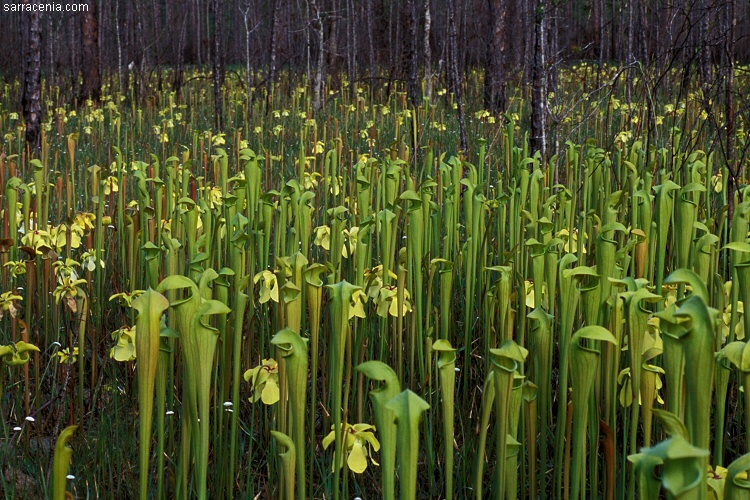
southern Mississippi, and three counties in Alabama near Mobile Bay. A site I have seen in Mississippi is the largest, most
extensive population I have ever seen of any Sarracenia. It practically makes me cry
every time I have seen it. (Pretty much for the same reason the Horta laments the murdered children in the Vault of Tomorrow.
If you don't know what I am talking about, I am a little sad for you.)
Page citations: Kartesz, J. et al. 2009 (BONAP);
Mazur, C., & Mazur, M. 2004;
McDaniel, S. 1971; McPherson, S. 2006; McPherson, S. & Schnell, D. 2011; Rice, B.A. 2006a; Schnell, D.E. 2002a;
Sheridan, P.M. 1991; personal observations.


