Q: Darlingtonia: range and conservation status
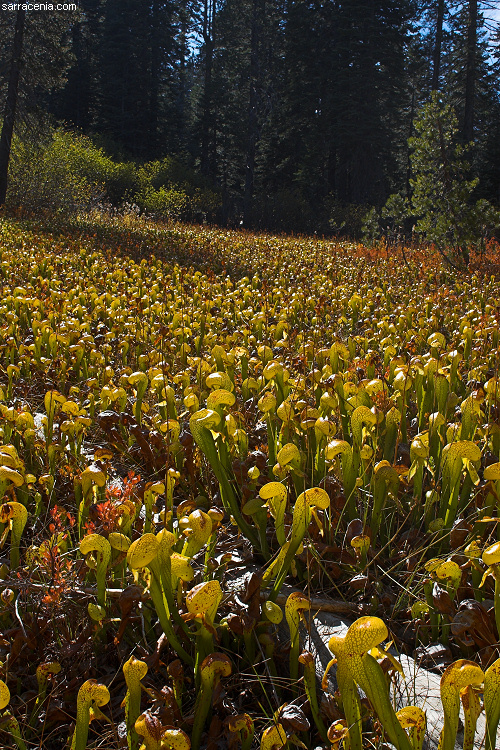
Streamside, California
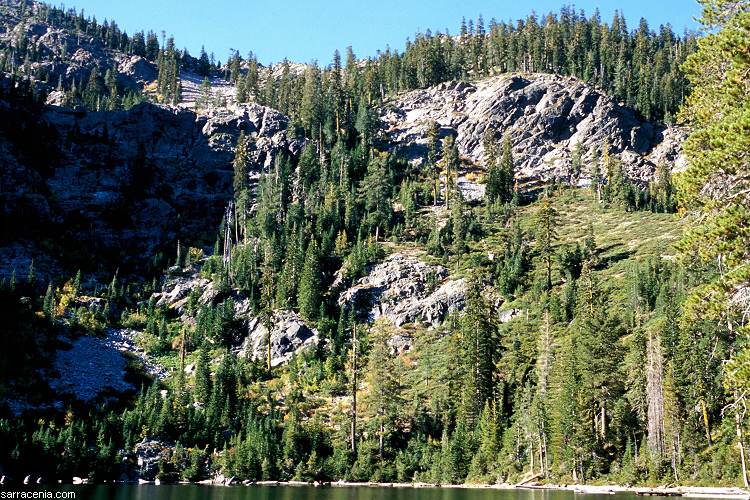
Cliffside, California
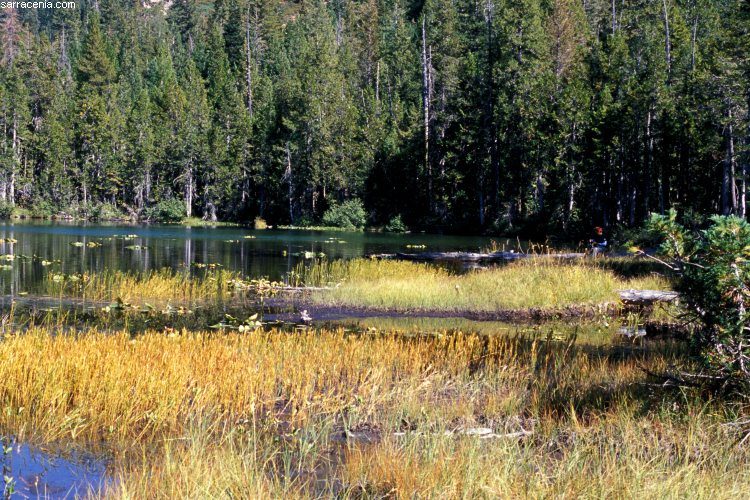
Lakeside, California
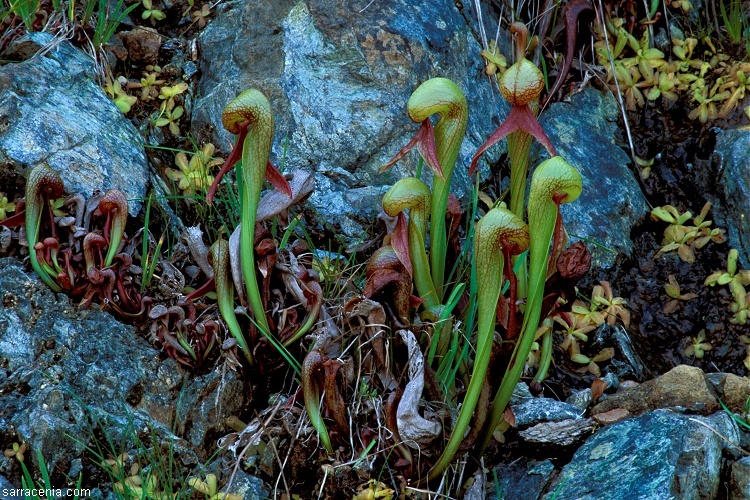
On serpentine
A: Darlingtonia has a small and patchy range in western
USA (Oregon and Washington). For more details, see my USA information.
Currently, there are no obvious killer threats devastating Darlingtonia, but a number of
clouds are on the horizon.
- Land development is proceeding slowly but surely. Homes are going up in Darlingtonia territory, sometimes right across from Darlingtonia sites. It cannot be long before people start thinking about draining and "reclaiming" those Darlingtonia sites.
- Along with direct habitat destruction comes land fragmentation. I have seen several Darlingtonia sites which, while not destroyed outright, are on the edges of developed sites. I am sure those neighboring landowners are not looking forward to wildfires. Such wildfires are needed to open habitat for Darlingtonia. Wildfire prevention results in the degradation of Darlingtonia sites.
- A fungus called Phytophthora lateralis is attacking Port Orford cedar trees (Cupressus lawsoniana, aka Chamaecyparis lawsoniana), killing them by a root rot. This grand tree is common in Darlingtonia territory, especially along streams in high quality Darlingtonia sites. What will happen to Darlingtonia if this important tree is removed from the system? Meanwhile, I have observed that the invasive shrub Cytisus scoparius can survive in the serpentinic soils that Darlingtonia loves so much. Cytisus scoparius, being a plant in the bean family, fixes airborne nitrogen via bacteria. Will this plant enrich the soils so that Darlingtonia can no longer live or will the nitrogen simply be washed away with no effect? Might Darlingtonia be physically displaced by this shrub by being shaded out?
- Bad grazing practices damage sites.
- Many Darlingtonia sites occur on rich beds of nickel ore. If and when the market changes so that it becomes cost-effective to mine nickel, entire mountains will disappear into refineries. The Darlingtonia on these mountains will not stand a chance.
- Plant poaching is, at most, a minor concern. Most horticulturists know that transplanted Darlingtonia perform very poorly.
Page citations: Rice, B.A. 1997, 1998, 2001c, 2006a; Rondeau, J.H. 1991; Teichreb, C. 2006; personal observations.


