| Heterophyllous Mexican and Central American Pinguicula | |
|---|---|
|
Subgen. Temnoceras sect. Temnoceras P. acuminata: HID P. agnata: HID P. calderoniae: QUE, SLP P. colimensis: COL, MIC, GUE P. conzattii: OAX P. crassifolia: HID P. cyclosecta: NUE P. debbertiana: SLP P. ehlersiae: HID, SLP P. elizabethiae: QUE, HID P. esseriana: SLP, TAM P. gigantea1: OAX P. gracilis: NUE P. greenwoodii: OAX P. gypsicola: SLP P. hemiepiphytica: OAX P. heterophylla: OAX, GUE, MIC P. ibarrae: HID P. imitatrix: GUE P. immaculata: NUE (P. jaumavensis: TAM) P. kondoi: TAM |
P. laueana: OAX P. laxifolia: TAM P. macrophylla: GUA (& HID?) P. martinezii: HID (P. medusina: OAX) P. mesophytica: ES, GT, HO P. mirandae: OAX P. moctezumae: QUE, HID P. moranensis: many MX states; GT P. nivalis: NUE P. oblongiloba: western MX states P. orchidioides: OAX, GUE; GT P. parvifolia: JAL P. pilosa: TAM (P. potosiensis: SLP) P. pygmaea: OAX (P. rectifolia: OAX) (P. reticulata: SLP) P. rotundiflora: TAM, NUE (P. stolonifera: OAX) P. utricularioides: OAX (P. zecheri: GUE) |
|
ES=El Salvador GT=Guatemala HO=Honduras MX=México GUE=Guerrero, MX OAX=Oaxaca, MX TAM=Tamaulipas, MX |
SLP=San Luis Potosí, MX HID=Hidalgo, MX QUE=Querétaro, MX NUE=Nuevo León, MX COL=Colima, MX MIC=Michoacán, MX GUA=Guanajuato, MX JAL=Jalisco, MX |
|
1Weakly heterophyllous, treated as homophyllous in Roccia et al. 2016. |
|
Q: Heterophyllous species of Mexico and Central America
A: By any measure, southern Mexico is a center of tremendous diversity for
Pinguicula. Here we find some of the most spectactular plants in the genus. Many of these plants
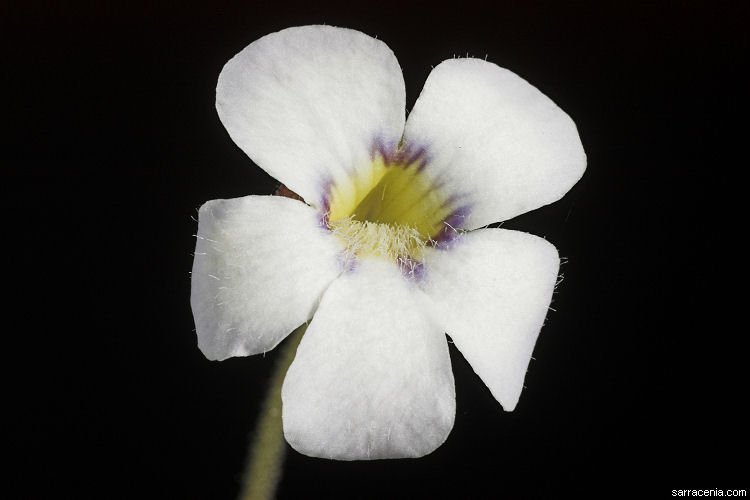
also have enormous and beautifully colored flowers.
With such diversity, however, comes some challenges. It seems that many of the species are not clearly differentiated from
each other, so where some botanists see multiple species all with subtle differences, others may see a smaller number of
species that have variable characteristics. I am not an expert on these issues; I only know enough to be able to pay attention
to the discussions. The wide-ranging species Pinguicula moranensis has a particularly large number
of synonymous names. My lists of species to the right reflects my weakly-formed opinions.
The species on this page occur in habitats where they experience a relatively wet season and a
dry season. To survive the dry season they become more or less dormant, and during this dormancy period they produce shorter
(usually non-carnivorous) leaves. Such species are called the "heterophyllous" (i.e. "different
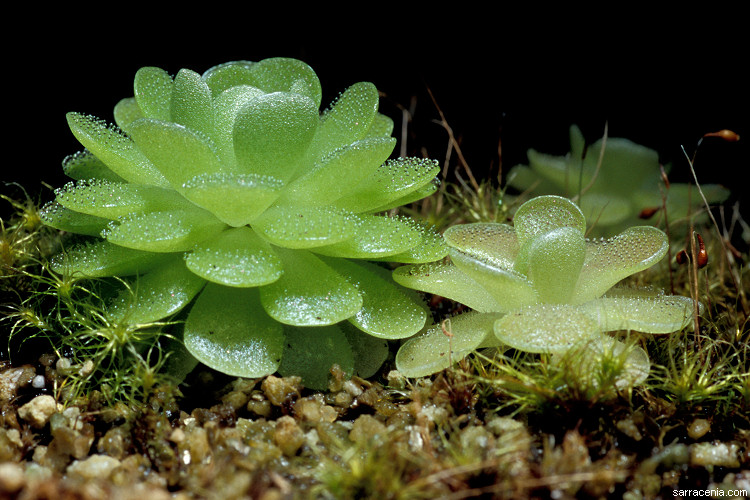
leaves"). Pinguicula colimensis regresses to a structure that essentially looks like a bulb.
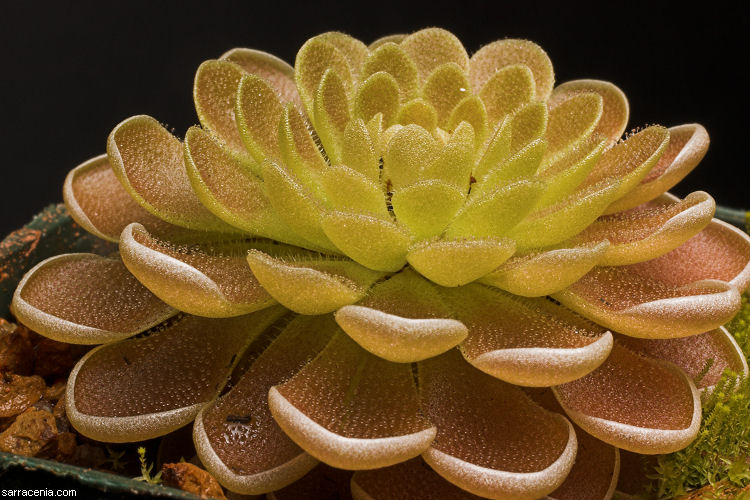
Pinguicula moranensis produces a mass of leaves so short and tightly packed that it looks more like
a species of Sempervivum than anything carnivorous! Meanwhile, P. agnata
and P. gigantea
are barely heterophyllous, and their dormancy leaves are only marginally smaller than its normal leaves.
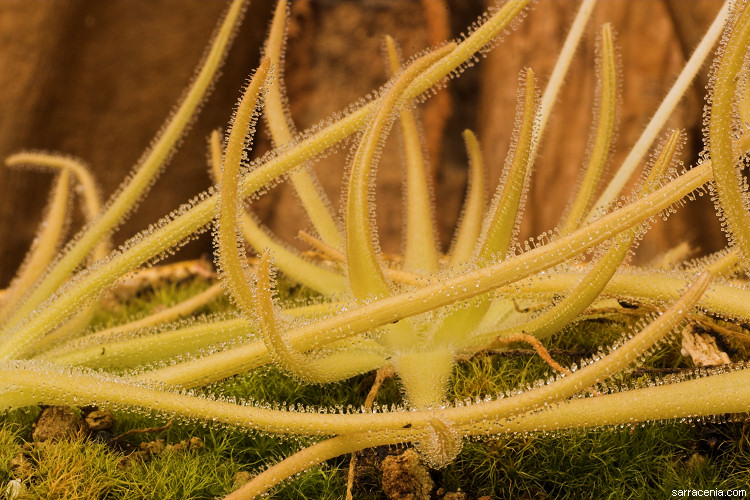
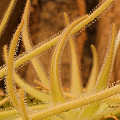 P. gypsicola
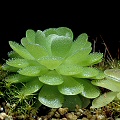 P. esseriana
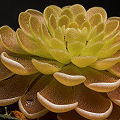 P. debbertiana
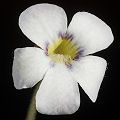 P. agnata
Many of the Mexican species hybridize, and the resulting plants are often easier to grow than pure species.
The table above lists the subgenera and sections for Pinguicula from this geographic range.
As increasingly robust
molecular research is done, these groupings will no doubt be rearranged. I would be happy
to hear from experts on how these should be reshuffled, as the current classifications of
some of the entries above unsettle me.
Changes from 2016-2018
The species here experienced big changes. First, the sections Agnata, Heterophyllum,
Crassifolia, Longitubus, Orcheosanthus,
and Microphyllum were all absorbed into
subgenus Temnoceras section Temnoceras!
A few species were lost, too, as...
P. medusina is merged with P. heterophylla...
P. reticulata is merged with P. kondoi...
P. jaumavensis is merged with P. esseriana...
P. stolonifera is merged into P. orchidioides...
P. potosiensis, P. rectifolia, and P. zecheri were merged with
P. moranensis.
As such, the names of these lost species appear in parentheses on this table, and on the master species list.
P. pygmaea was added as a new species...
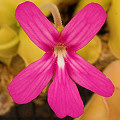 P. moranensis
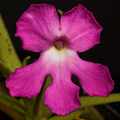 P. moctezumae
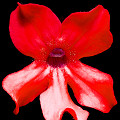 P. laueana
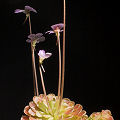 P. jaumavensis
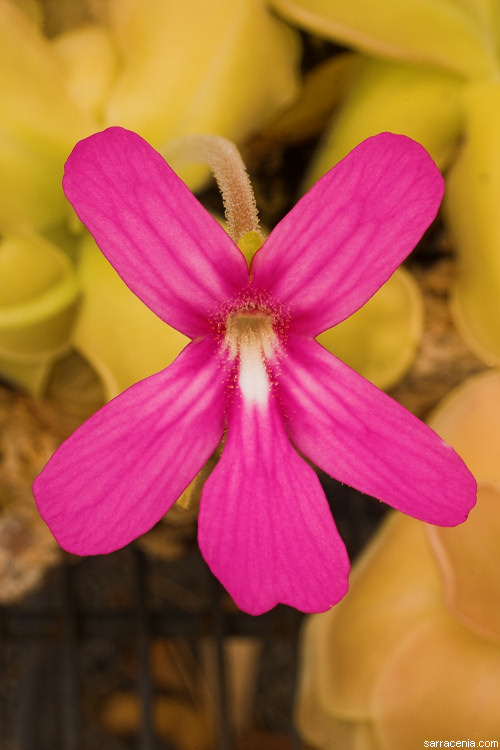
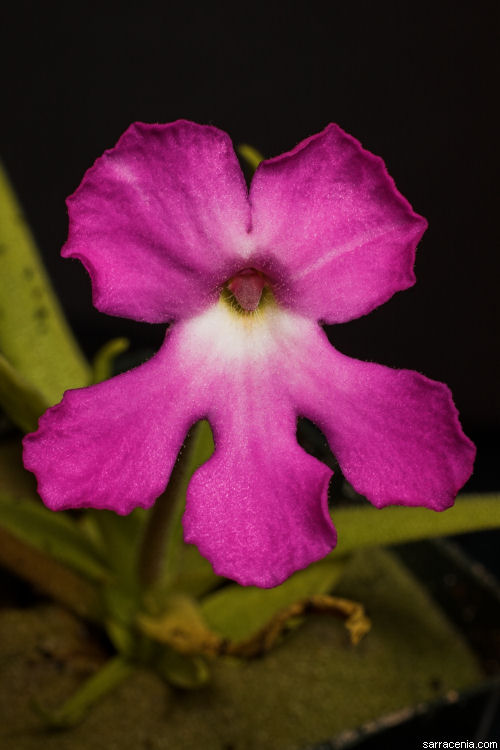
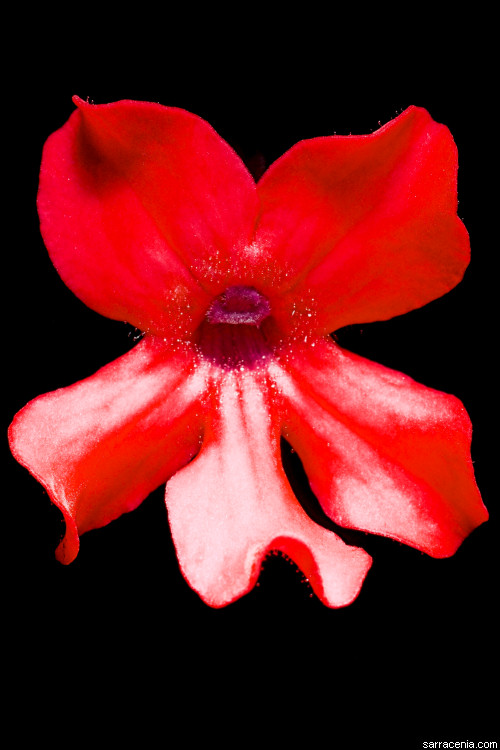
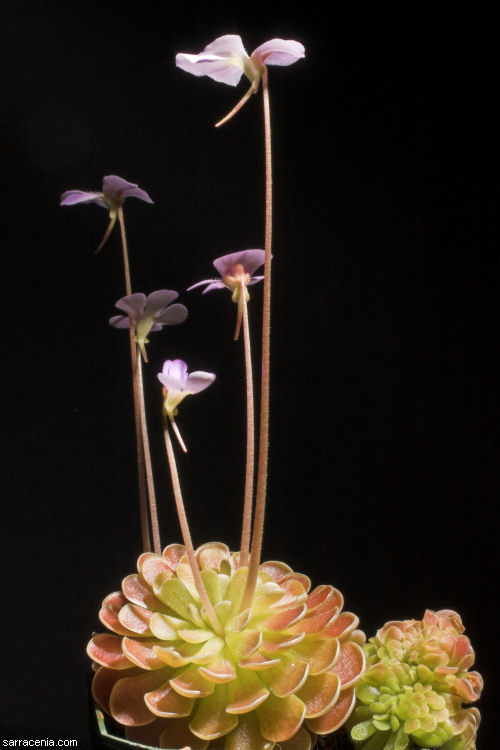
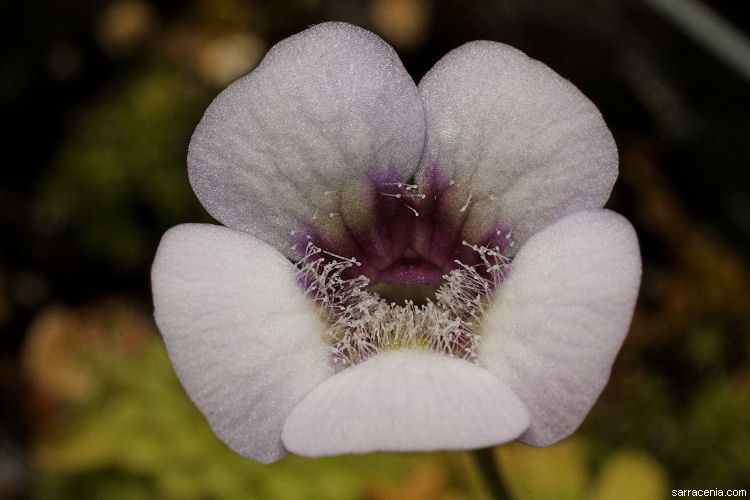
Pinguicula colimensis
This plant, which has extremely pretty flowers, has very long-stalked tentacles.
Pinguicula cyclosecta
I am particularly fond of this species, as the dainty foliage of some clones in
cultivation have an intriguing purplish cast.
Pinguicula gigantea
This species is interesting because, among other things, stalked glands occur
on both the top and bottom
surfaces of the leaves. Very few other species share this characteristic. This is probably the same entity as a plant distributed under
the name Pinguicula 'Ayautla'.
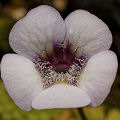 P. rotundiflora
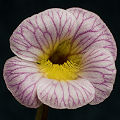 P. kondoi
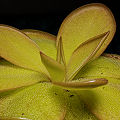 P. rectifolia
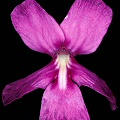 P. potosiensis
Pinguicula gypsicola
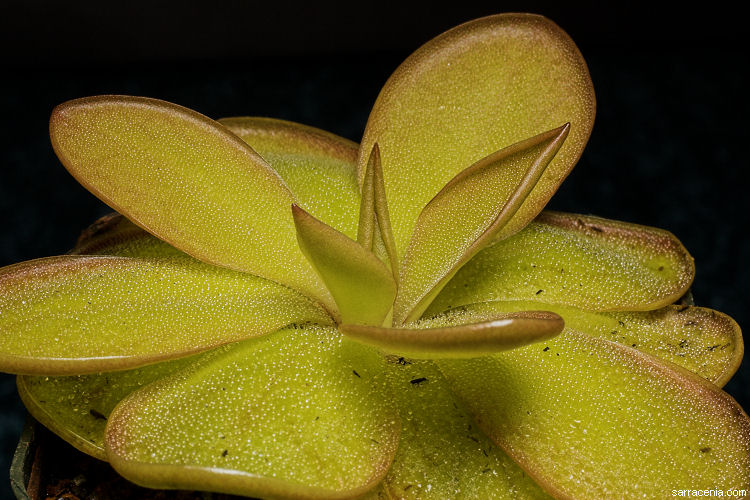
One of the species with long, snakelike leaves that make it look somewhat
sundewish.
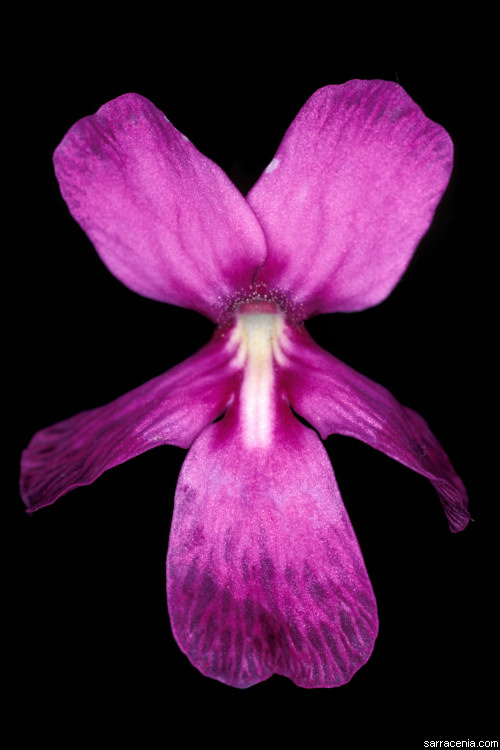
Pinguicula laueana
The flowers of most clones are intensely red, but some have flowers that are
pale red, or purple hued, or even orange. The foliage is often dull red, especially in dormancy, but this is not a rule as some
plants are a more conventional, bright green.
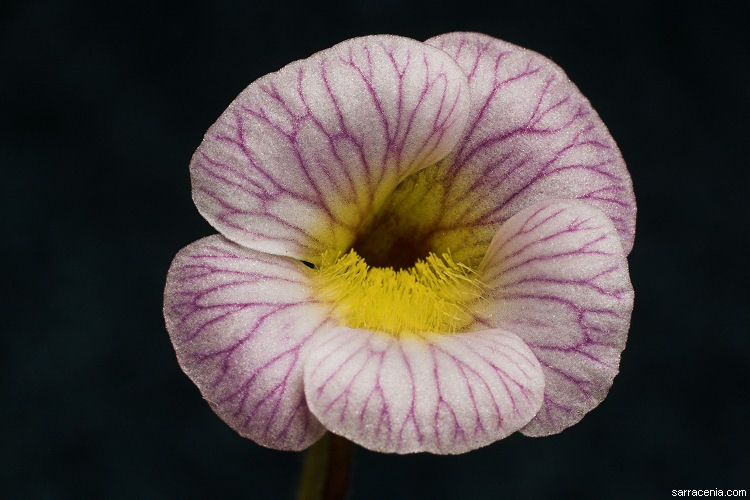
Pinguicula moranensis
The most widespread species in this group, there are many variants that have been
given names that have later been denounced by science, such as "P. caudata". The
lovely cultivar P. moranensis 'Libelulita' indicates a clone of this species
with highly veined petals.
Pinguicula utricularioides
This species has not been relocated since it was first collected in 1956. The evocative specific epithet comes from the form
of the leaves, which are clawed or petiolate, with perhaps a cup-shaped lamina. It is unknown if this is just an abnormality in an otherwise
conventional species, although the type collection consists of several rosettes, all of which seem to be showing this
character to varying degrees.
Page citations: Casper, J. 1966; Cieslak, T.
et al., 2005; Lampard, S. et al. 2016; Rice, B. 2006a;
Roccia, A. et al. 2016; Schlauer, J. 2002; Shimai, H. & Kondo, K. 2007.


