Q: Heliamphora: conservation
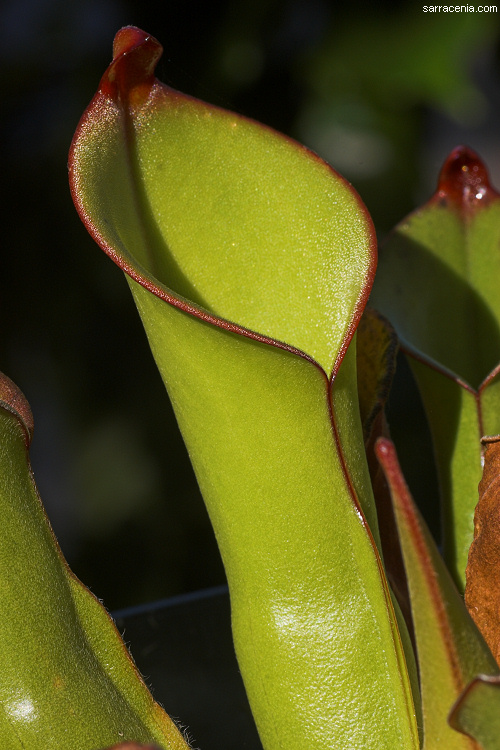
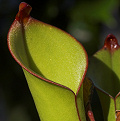 H. minor
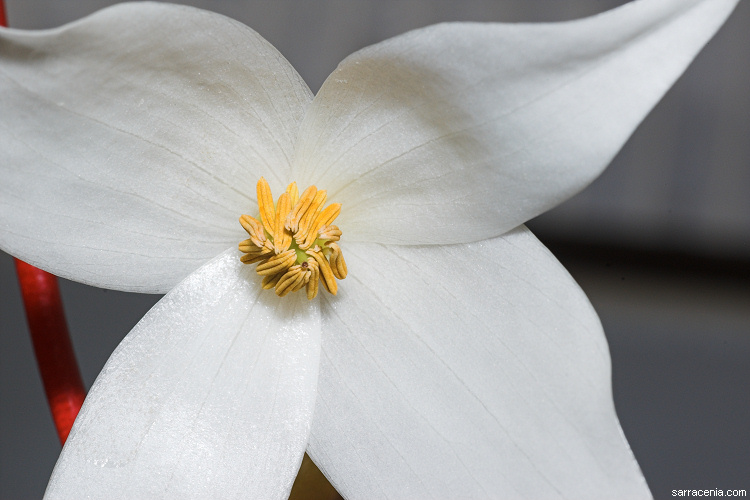
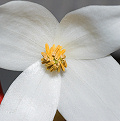 H. nutans
A: Because Heliamphora
grow in such inaccessible locations, you might think they are not under
threat. However, reports from the tepuis are a little disconcerting---it
seems the native sites are getting more and more traffic. Web sites promoting tepui-tourism sometimes show people plowing
through delicate sites as if they were on a reality TV show. I expect significant
habitat and plant population degradation as a result. Other dangers are
climatic changes from deforestation (which could affect rain patterns) and
field collection. Illegal mining is also a problem.
Conservation in the Guiana highlands seems to be difficult and politically charged. There are a number of areas with special protection
designations. However, the indigenous people do not necessarily support these designations. Also tourism is very high in areas.
It seems that if you want to follow all the rules to visit the area legally, there is a set of literally impossible-to-obtain
permits you must obtain. In around 2012 I was told by Dra. Argelia Silva at the Venezuelan ONDB-MARN (la Oficina Nacional de Diversidad
Biológica, Ministerio del Ambiente y de los Recursos Naturales) that to merely visit Venezuelan tepuis you require the
following permits and authorizations:
- A permit from the National Park Institute
- A permit from the indigenous organizations
- An authorization of a special tepui commission
If you wish to collect plants for scientific reasons, you will additionally require the following:
- A plant collection permits from the Ministry of the Environment and the Fundacion Instituto Botanico de Venezuela
- An authorization from the Ministry of Education and FONACIT
- A special access contract to the genetic resources called "Acuerdo de Cartagena."
I have trouble reconciling this
list with all the tourism agencies visiting the tepuis. A quick web search reveals dozens of agencies promoting all kinds of
ecotourism adventures
to the area, some with really stupid "land of the dinosaurs" themes. Yet botanists I know who are
trying to get permits to conduct valid research cannot get permits to enter and study areas? This seems really peculiar.
Furthermore, if you look at the recent (i.e., 2011) group of new Heliamphora taxa described,
you will see they are all based on old herbarium specimens or plants in horticulture. What kind of botany can you do, if you are
limited only to mining old herbarium specimens?
I spend a lot of time thinking about ethical issues in conservation. One thing I come back to, time and time again, is that nearly
all (if not all!) the species of Heliamphora are in cultivation. This is great, because I believe that horticulture can
have a role in appreciating plants, and even furthering conservation. But how did these get into cultivation?
Many of the species
were not even described before 2000! Sure, a few of these are really just entities that
we knew about a long time ago, and were just elevated to species status, but most are new discoveries. Clearly, some sort of propagules
are being taken from the Tepuis in violation of Venezuelan (and, no doubt, Brazilian) law.
In summary, the South American laws are there, presumably to protect biodiversity and also to minimize biopiracy from outside agents.
However, they seem to be primarily effective at slowing down science. They are not stopping the removal of plant propagules.
This is a particularly poignant matter for me because conservationists and
government officials working in or based in South America have decided more than once that I am a suitable representative of
carnivorous plant horticulture practices, and have attacked me in e-mails regarding the origins of these plants. Give me a break--the
closest I have ever been to the Tepuis is Costa Rica!!!
On the other side
of the fence, some carnivorous plant
horticulturists have sent me absolutely insulting emails for even asking questions about the legality of tepui trips and plants.
So I am squarely in the middle! It was an unpleasant place to sit--and ultimately one of the reasons I decided to step back from a formerly
more prominent role in the community of carnivorous plant horticulture and communications.
Page citations: Huber, O. 2001; McPherson, S. 2006;
Rice, B. 2005a, 2006a.


