| Species of Latin America | |
|---|---|
| Subgenus Genlisea Section Genlisea | |
| G. aurea1 | Brazil |
| G. filiformis1 | México, Belize, Cuba, Nicaragua, Colombia, Venezuela, Guyana, Bolivia, Brazil, French Guiana, Honduras, Surinam |
| G. glabra2 | Venezuela |
| G. guianensis2 | Bolivia, Guyana, Venezuela, Brazil |
| G. multiflora7 | Brazil |
| G. nigrocaulis1 | Brazil, Guyana, Venezuela |
| G. oxycentron1 | Brazil, Guyana, Venezuela, Trinidad |
| G. pulchella1 | Venezuela, Guyana, Surinam (?) |
| G. pygmaea1 | Colombia, Venezuela, Brazil |
| G. repens1 | Colombia (?), Venezuela, Guyana, Brazil, Surinam (?), Paraguay |
| G. roraimensis1 | Brazil, Venezuela, Guyana |
| G. sanariapoana2 | Colombia, Venezuela |
| G. tuberosa1 | Brazil |
| Subgenus Tayloria | |
| G. exhibitionista3 | Brazil |
| G. flexuosa4 | Brazil |
| G. lobata5 | Brazil |
| G. metallica6 | Brazil |
| G. nebulicola7 | Brazil |
| G. oligophylla6 | Brazil |
| G. uncinata8 | Brazil |
| G. violacea6 | Brazil |
|
1Yellow-flowered. 2Violet-flowered. 3Flower pale lilac, & base of lower lip white with pale greenish-yellow markings. 4Flower violet to pink or lilac, & yellow splotches are outlined with a blue to purplish margin. 5White-flowered with yellow palate markings, upper lip veined violet; a violet spur. 6Flower violet to pink or lilac, & yellow splotches occur on a white background, or are margined in white. 7Flower pale lilac, & base of lower lip with yellow markings. 8Flower violet to pink or lilac, & yellow splotches. |
|
Q: New World Genlisea species
A: With the exception of G. filiformis, all these species are
restricted to South America and Trinidad. Their ranges are
provided in the table to the right.
Most Genlisea are in subgenus Genlisea. These plants share a mode of seed
capsule dehiscence which is unique in the world of flowering plants. Namely, their seed capsules break open by a fissure curving along the
equatorial line of the fruit, as well as along other spiraling latitude-like lines nearer to the tip of the fruit.
The Genlisea species in subgenus Tayloria
have fruit which split along longitudinal lines.
In Latin America, the subgenus Genlisea are further placed in Section Genlisea.
This section is characterized by species with pedicels that are straight or bend upwards in fruit, and usually yellow flowers. There are some
violations of the yellow-flower rule--I recommend for this that you refer to the appropriate
references. (I mean, this web site is an OVERVIEW.)
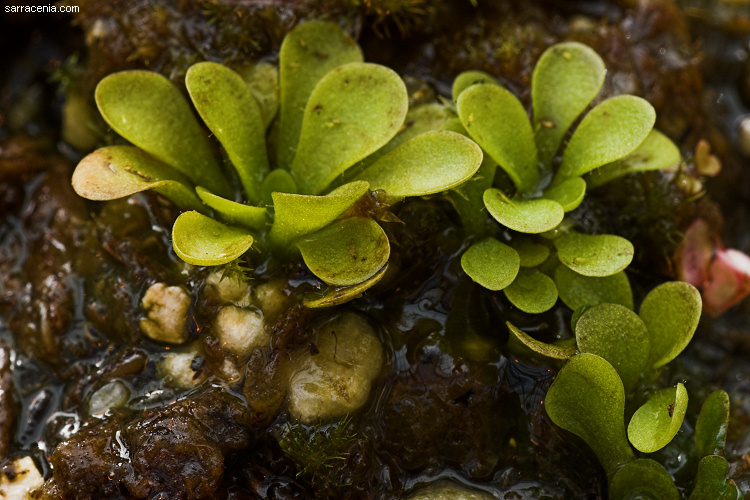
Genlisea aurea
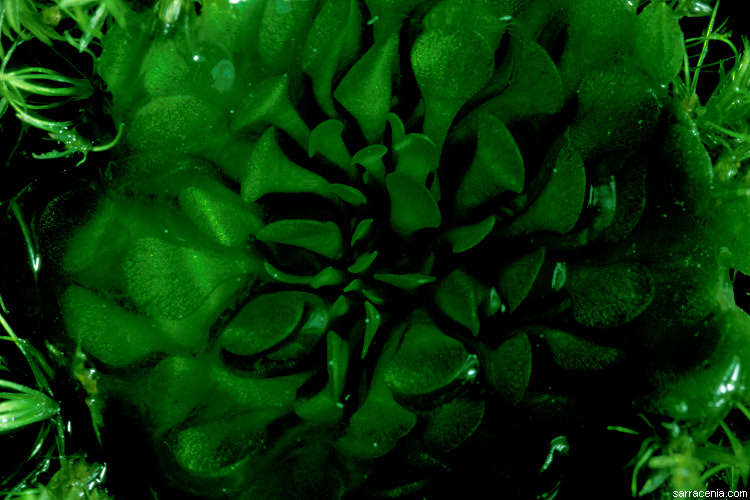
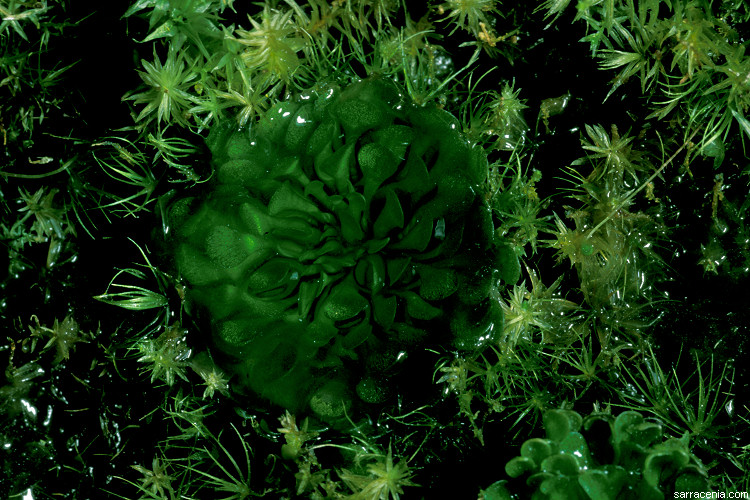
This interesting species produces a thick mass of gel that coats the leaves. This
gelatinous slime is so thick that the leaf rosette is completely embedded in the goo. I have never been very successful with
this plant--oh, it persists in cultivation, but does not thrive. Nice goo, though.
Genlisea exhibitionista
The origin of this specific epithet comes from the exposed nature of the
plants sexual organs--as the corolla lobes are liberally and conspicuously parted, revealing the male and female organs within.
Genlisea filiformis
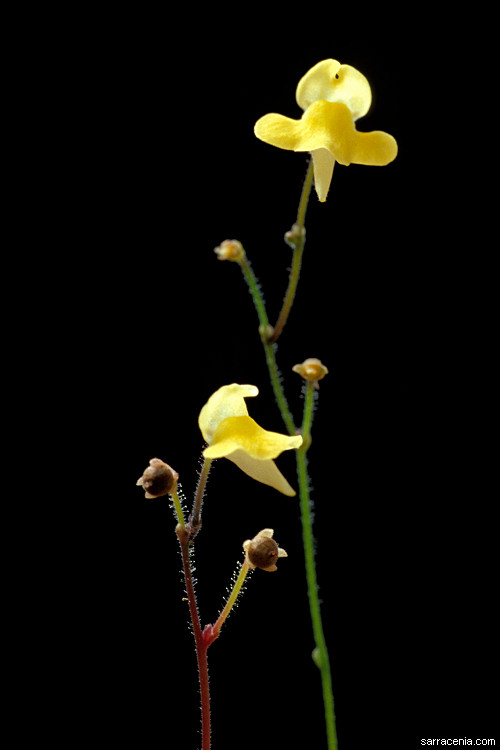
A delicate, yellow-flowering species with an enormous range.
I thought long ago I had this in my collection, but Fernando Rivadavia figured out that it must have just been an unhappy
Genlisea aurea.
Genlisea flexuosa
A plant which can be difficult to separate from
Genlisea violacea, but noteworthy for having inflorescences with scrambling or twining tendancies--a
characteristic unique in this genus. Referred to as "G. aff. violacea 'Giant' " in
previous publications.
Genlisea glabra
A completely glabrous species with a purple to lilac or almost white flower, which is very rare
for Genlisea subgenus Genlisea plants from this part of the world.
Genlisea guianensis
A deep purple-flowering species (sometimes with white on the lower lip), with long, straplike leaves.
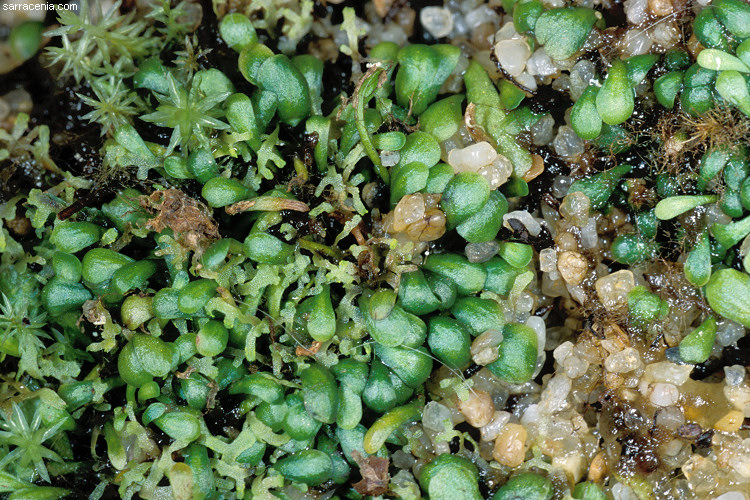
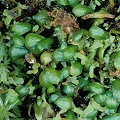 G. repens
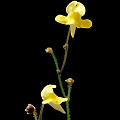 G. pygmaea
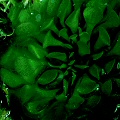 G. aurea
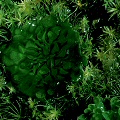 G. aurea
Genlisea lobata
An exceedingly pretty species, with a white lower lip with yellow on the proximal bulge, and white
upper lips heavily veined purple.
Genlisea metallica
A very distinctive species with dark violet flowers that have a metallic
shine. It forms a cormlike organ used to survive dry periods. Critically endangered, with only two known populations.
Referred to as "G. sp. Itacambira" in previous publications.
Genlisea multiflora
The flower is really white to the faintest of lilac, with yellow on the lower proximal palate.
Genlisea nebulicola
A very rare plant that grows as a lithophyte within the sprays of waterfalls and on
rock surfaces.
Genlisea nigrocaulis
A medium-small plant with yellow flowers and strikingly dark purple or black scapes.
Genlisea oligophylla
Similar to G. uncinata in having few leaves at
anthesis, and large succulent photosynthetic scapes. However, these species are different in floral characters.
Genlisea oxycentron
A yellow flowered plant with a very long, pointed floral spur.
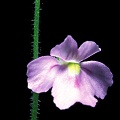 G. violacea
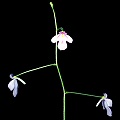 G. violacea
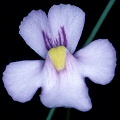 G. violacea
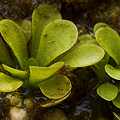 G. violacea
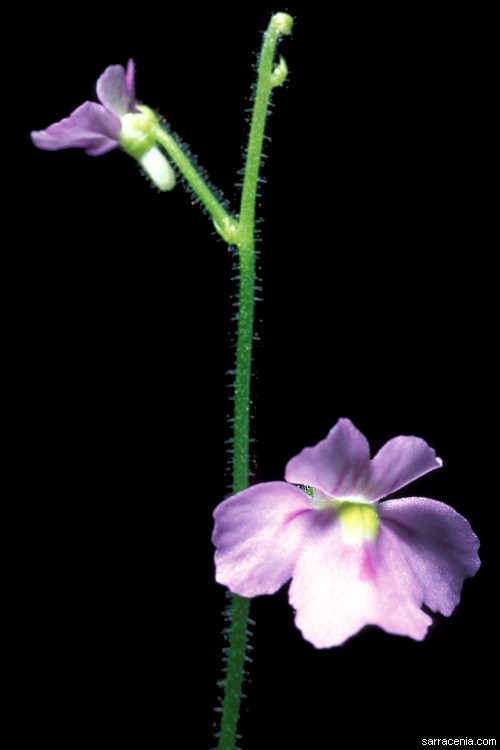
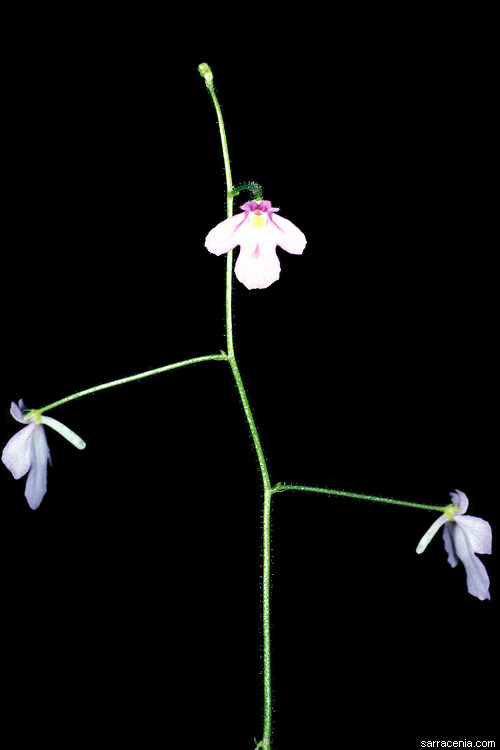
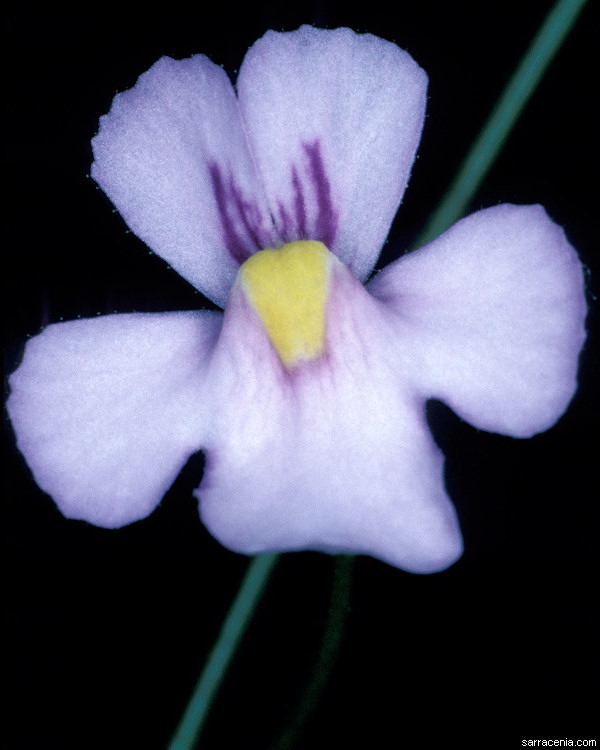
Genlisea pulchella
A yellow species that looks a great deal like Utricularia subulata!
It differs from Genlisea repens by a number of small, technical, but significant details.
Genlisea pygmaea
An easily grown, yellow-flowered species. Treat this like a tropical
Utricularia and you will do just fine. Perhaps the only special treatment is to avoid
disturbing it as much or as aggressively as you might abuse a weedy little Utricularia.
Genlisea repens
Another easily grown, yellow-flowered species. Again, grow this like a tropical
Utricularia. Neither this nor G. pygmaea grows particularly quickly, but
they are reliable in cultivation.
Genlisea roraimensis
A yellow-flowered species with a broad, short spur that rarely is as long as the lower lip of
the flower.
Genlisea sanariapoana
Bluish-lilac flowers, similar to those of Genlisea guianensis
but slightly smaller.
Genlisea tuberosa
Similar to Genlisea repens, except for the production of tubers (a unique character in the
genus, as well as other technical details.
 G. lobata × violacea
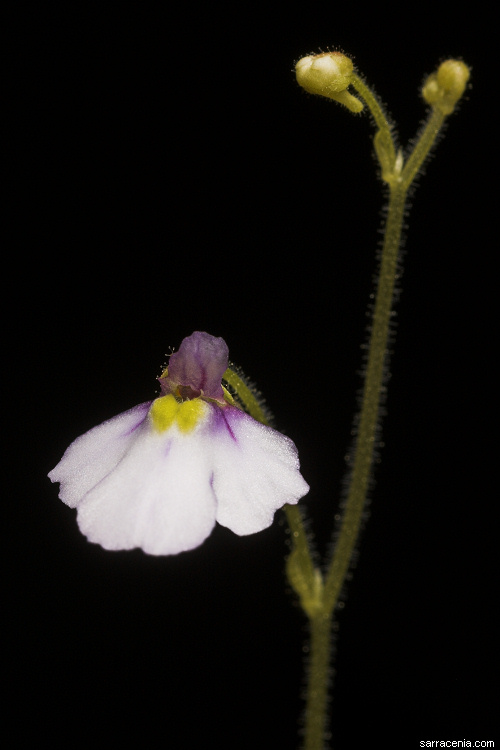
Genlisea uncinata
One of the largest species in terms of its 1-m tall flowering scapes. Some speculate
that this plant does most of its photosynthesis in its big flower stalks! The flowers themselves are not very large,
alas.
Genlisea violacea
This was long commonly grown by horticulturists, but various clones have been
identified as new species.
G. lobata×violacea
This hybrid is in a number of collections,
but the plant is so similar to G. lobata that many growers suspect it might just be that
species instead.
Page citations: Fischer, E. et al., 2000; Fleischmann, A. 2012;
Fleischmann, A. et al. 2011, 2018;
García, M.O. & Martínez S., E. 2002; Rice, B.A. 2006a; Schlauer, J. 2002; Taylor, P. 1991a.


