Q: Drosophyllum: cultivation
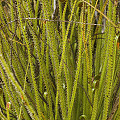 Mature plant
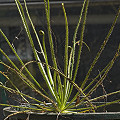 Young plant
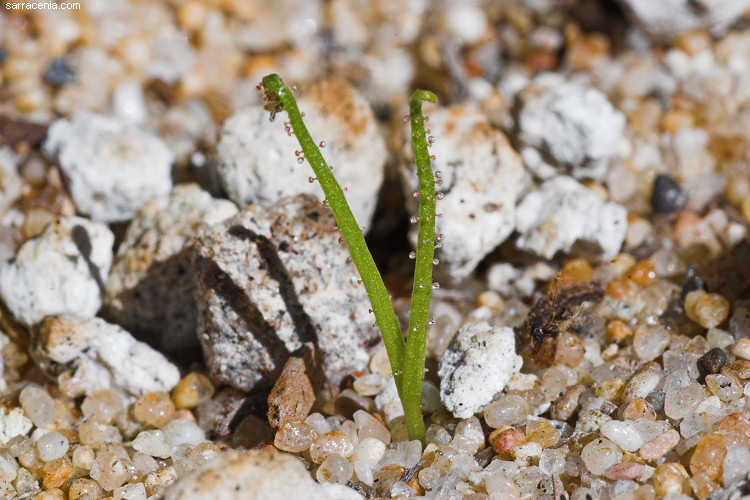
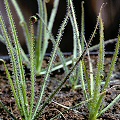 Seedlings
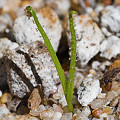 Germination!
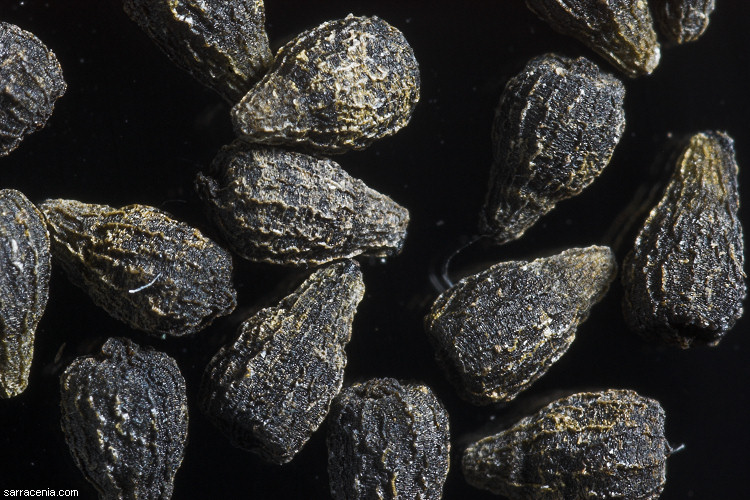
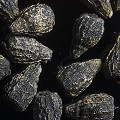 Seed
Seed
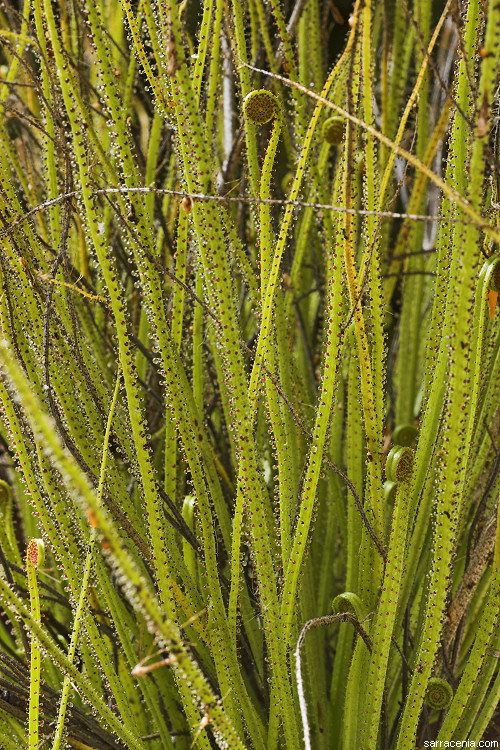
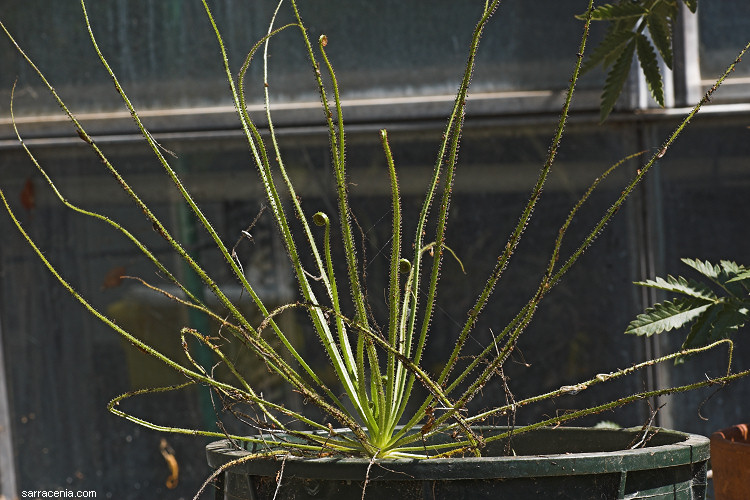
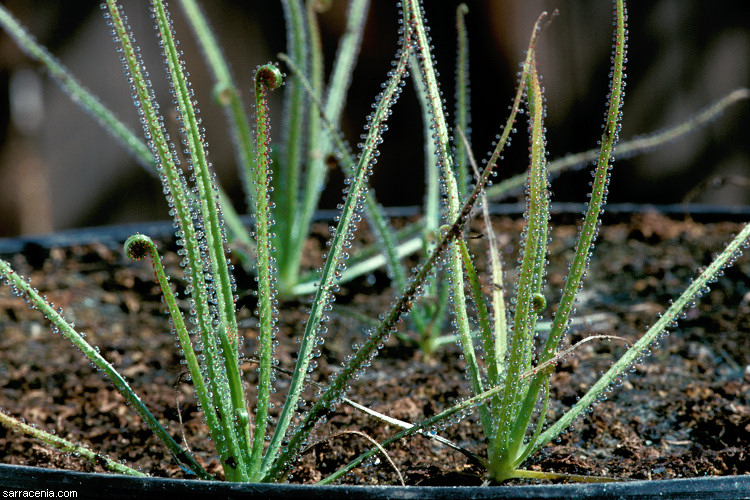
A: This is not an easy plant to grow.
I think that overall success depends upon whether you are lucky enough to get
seeds of a strain which grows well for you. I had seeds of a plant that grew fabulously in Arizona,
but when I moved to California the plants performed poorly and died before flowering. Meanwhile,
seeds from another source are growing marvelously in conditions that would have been toxic to the plants I grew
in Arizona!
To germinate Drosophyllum seed, they must of course be viable.
Usually, this means that the seed should be fresh. But if they have been stored carefully, even old seed can be
used--Bob Ziemer germinated Drosophyllum seeds that had been refrigerated for 22 years!
Various forms of pre-germination treatment involving giberellic acid,
boiling water, fire, scarification, and stratification have been suggested
and tried, but I have found that if the seed is less than a few months old
it will germinate well without special treatments. If you have old seed, you can try the tricks I mentioned,
but don't hold your breath.
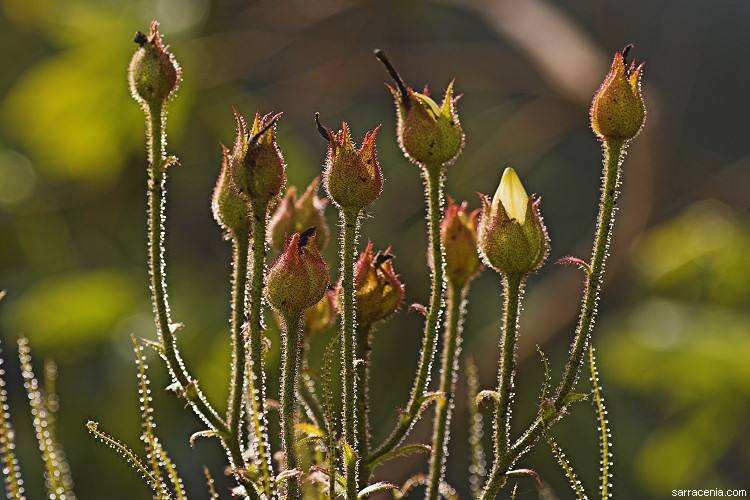
 Ripening fruit
 Old inflorescence
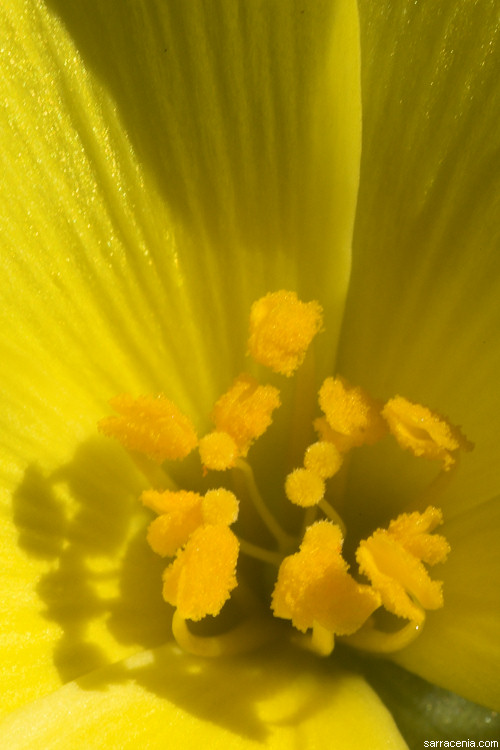
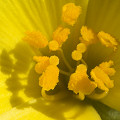 Sex bits
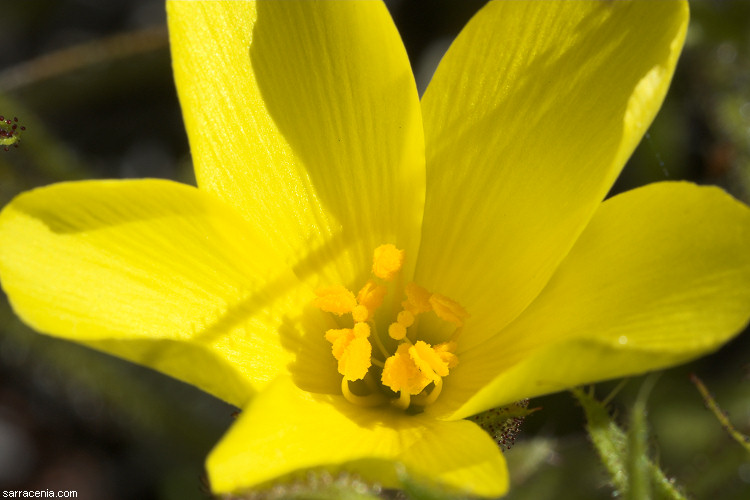
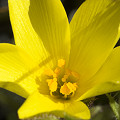 Flower
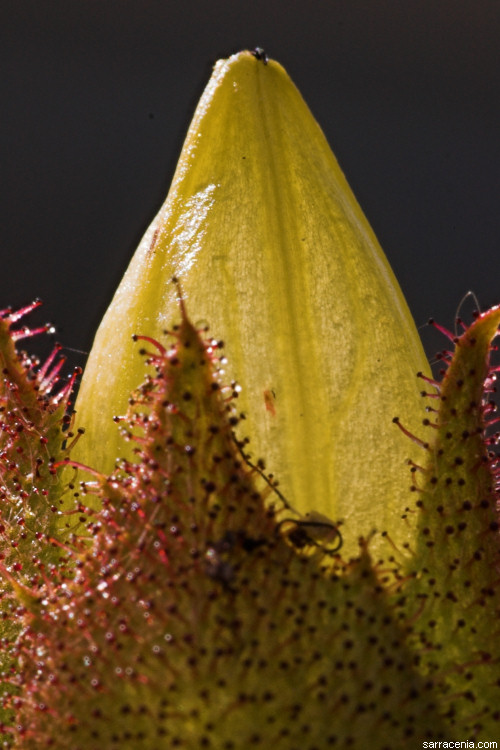
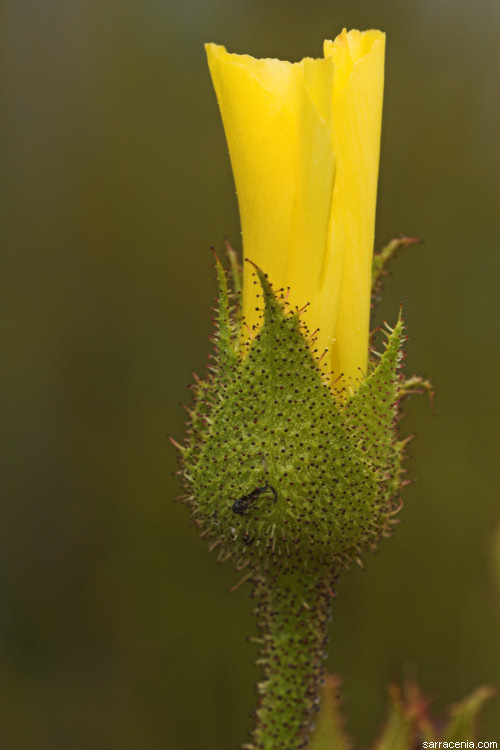
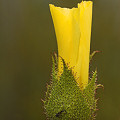 Flower bud
The soil medium should be a sandy peat mix; I like to include large aggregate materials like 1-cm chunks of pumice, perlite, or
rocks in the soil too. The highly regarded carnivorous plant author Adrian Slack suggests
slack-potting these plants,
although of course he did not call it that!
I find that the plants grow
well in a 50% humidity greenhouse without special treatment. If you live in a suitably
warm climate such as the Mediterranean climate of my home in the central valley of northern California,
you might have success growing them outside in full sun. Grow only a
few plants in each pot for best results. Do not fertilize them. Do not transplant
a specimen unless it is less than a few cm tall and you are practiced at the
genus. Vegetative propagation is normally not successful, although Anderson (2016) reported success. He detached the adventitious growth points that develop
along the stem, soaked them in 1000ppm gibberellic acid for an hour, then treated them as normal plants (but with a bit of supplemental moisture).
Some work has also been done on growing the
plant in vitro.
A perennial in the wild,
Drosophyllum
is difficult to maintain past two years in cultivation---it often lives just long enough
to produce seed. Also, many commonly grown strains of this plant die rapidly if the temperatures ever exceed
41-43°C (105-110°F).
Page citations: Anderson, M.S. 2016; D'Amato, P. 1998a;
Gonçalves, S. & Romano, A. 2005; Rice, B. 2006a; Slack, A. 1979, 1986;
Ziemer, B. 2008; personal observations.


