Q: Do you want to tell me about a species I missed?
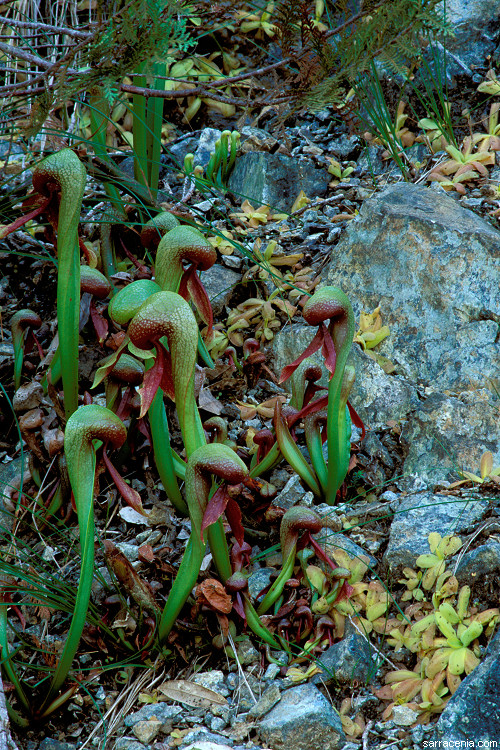
"Chrysamphora"
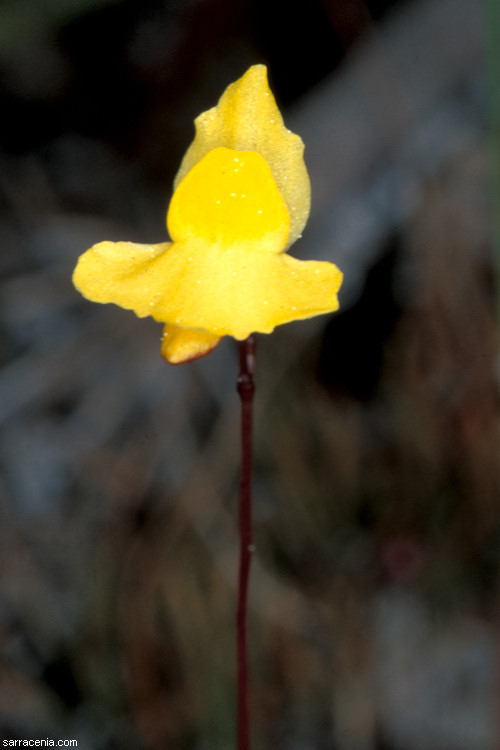
"U. cleistogama"
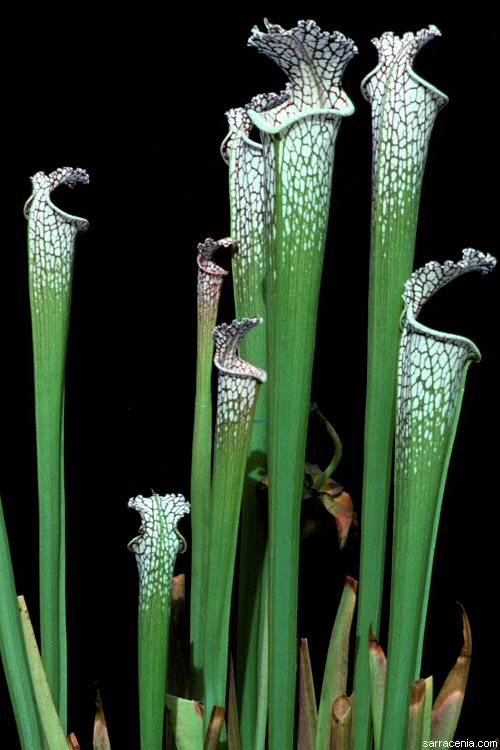
"S. drummondii"
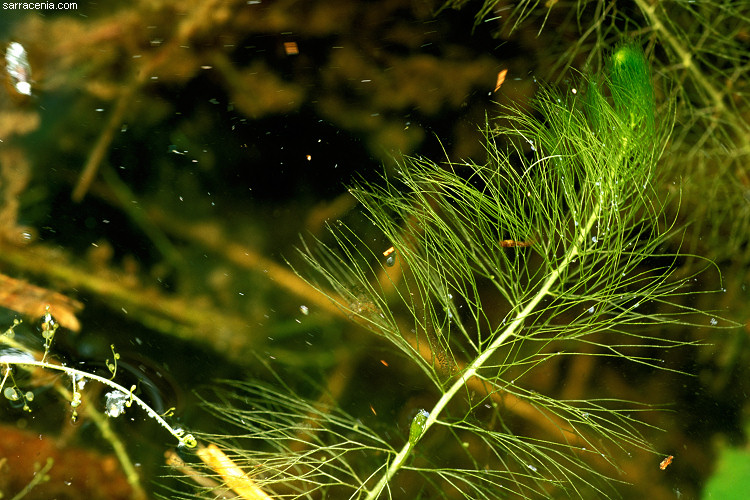
"U. fibrosa"
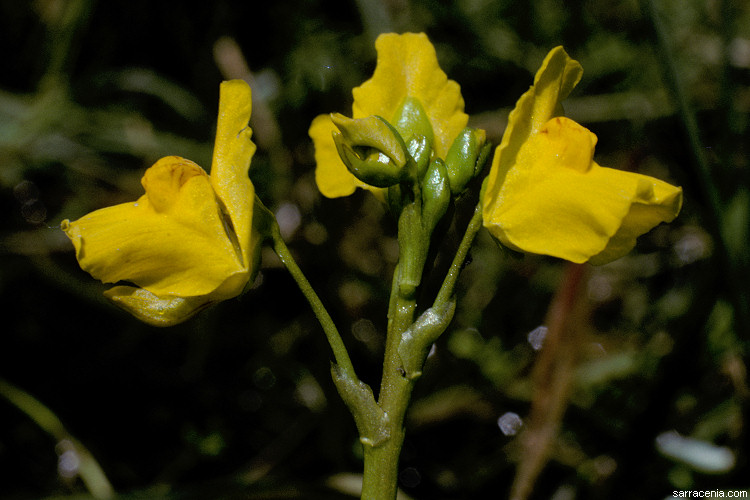
"U. vulgaris
subsp. americana"
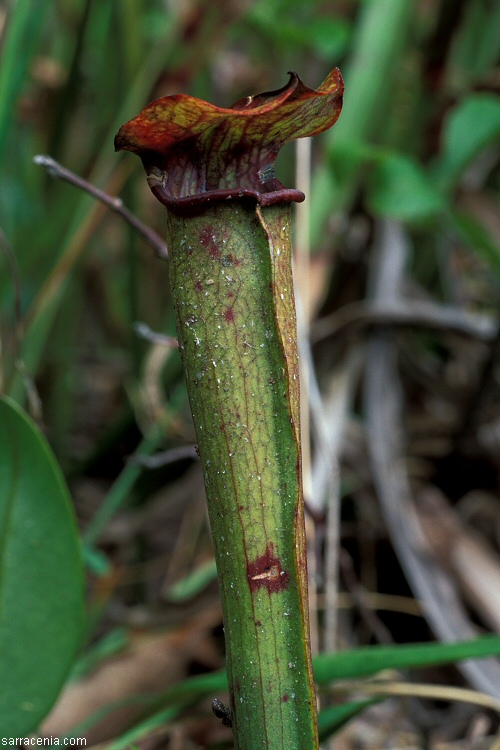
"S. rubra
subsp. jonesii"
A: I am fully aware that my lists of plants that follow may not agree with the lists that
other carnivorous plant botanists might have.
My lists are based upon Schlauer (2002) as a starting point. They have also been strongly informed by various papers and books by Taylor, Casper,
Lowrie, Fleischmann, Robinson, Rivadavia and others. Finally, in a few cases I added my own opinions.
However, please note that there is no such thing as an "official list" of species. Indeed, there is not even universal agreement as to the
very concept of species!So don't worry if your list looks different from mine. That's the nature of science, as humans try to place an imperfect
framework of understanding on a complex system, such as the life on our planet.
But still, you might wonder why some species are not listed in my pages. Here are the likely reasons. (And by the way, although
I keep referring to "species", these arguments hold for other taxonomic ranks such as subspecies, varieties, etc.
- Synonomy:
The very same plant you are looking for may have been described earlier, with a different name. For this reason, U. cleistogama should be discarded and U. subulata should be used instead. This is where looking at the names of scientists given after the species name can be very helpful.
- Lumping:
It might be that I have lumped species together, where you might think they are best treated as separate species. For example, I love Utricularia nova-zelandiae and U. monanthos. It broke my heart when botanists lumped these names together with Utricularia dichotoma. I resisted for a long time, but those more familiar with the plant in the wild than I concluded this was a wise decision, so I finally accepted the loss. Still, I grieve. This is also what happend to the genus Polypompholyx---it has been absorbed into Utricularia.
- Splitting:
I might see separate species where you do not. I am something of a splitter when it comes to Sarracenia, for example. I see S. jonesii and S. rosea where others may see just S. rubra subsp. jonesii and S. purpurea subsp. venosa var. burkii. I think there is probably merit to U. stygia, while others may lump this with U. ochroleuca. What do you think?
- The official publication is incomplete:
There are some populations of plants which very well might be a separate species, but which have not yet been described as such in the literature. There may be hints about it, such as someone calling plants by some informal name. But I do not recognize informal names here.
By the way, leaking a plant name pre-publication is very unwise, as another author who hears of such an impending description might choose to rush to publish the description in another journal, thus "scooping" the first author. The moral: do not sit on your science---publish it in a timely manner.
- I judge the science as weak:
Some papers, although they follow all the rules of publication, do not provide compelling or convincing results. The paper may present arguments for a proposed plant name, but I might conclude that based upon the description is just a variant population of a species that already has a very good name. This problem may be due to a difference of opinion between me and the authors, or it might be a poorly written paper that does not do the new entity justice in its description. It is also possible that the "new species" is something that I think is quite possibly just an abnormal or damaged individual of a previously-described entity. I have seen Utricularia macrorhiza, for example, take on some very weird forms when growing in alkaline conditions. Such plants might be misinterpreted as new species when the real story is just that they are growing in weird conditions. I am quite possibly wrong in my judgements--I have certainly made mistakes in the past--so maybe in the future I will change my assessment of the paper.
- Web page freshness:
Sometimes I haven't gotten around to updating the site. Don't hesitate to email me and kick me into action! (Or at least, try!)
Page citations: Rice, B.A. 2006a; Schlauer, J. 2002; citations listed above.


