Q: What makes carnivorous plants different from other plants?
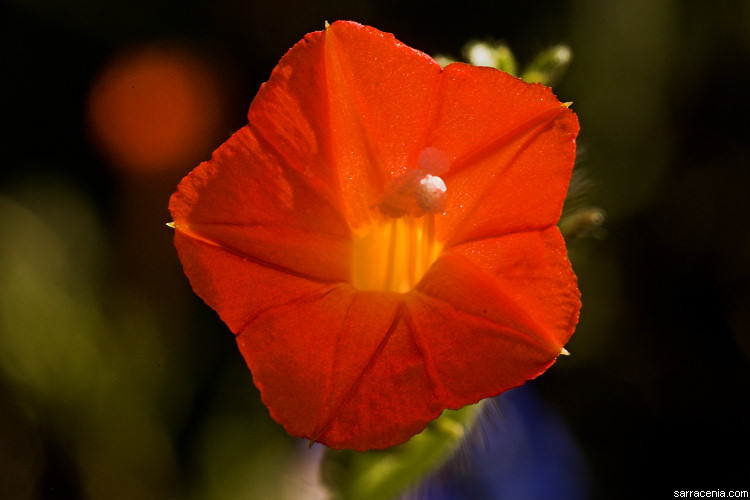
Ipomoea coccinea
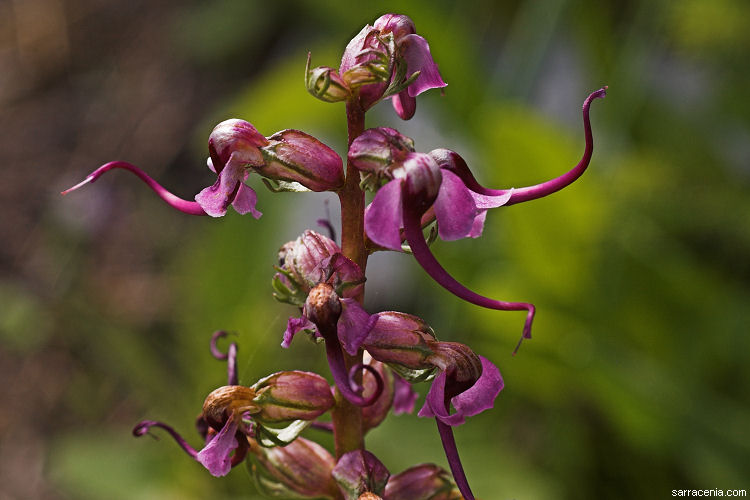
Pedicularis groenlandica
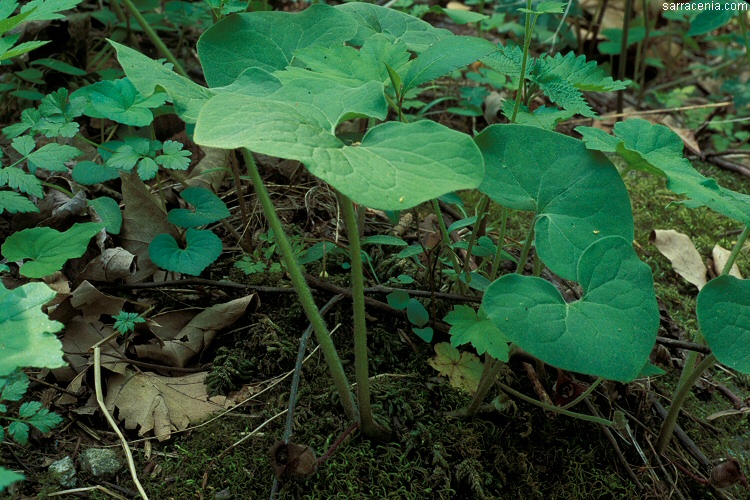
Asarum canadense
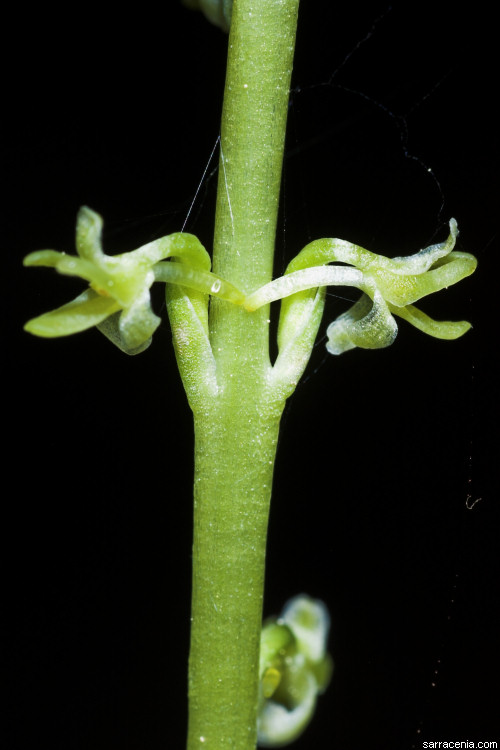
Piperia unalascensis
A: Really very little. Carnivorous plants are just like other plants,
except they have a toolbox of abilities that, altogether, allow the
plant to be carnivorous. All other plants have at least one of these abilities,
but only carnivorous plants can do them all. Let me repeat that list of carnivorous attributes from the previous pages,
but this time I will augment it with examples of conventional plants doing the exact same things that carnivorous plants do:
- Prey are captured by the plant, and are perhaps tempted along the way to do so.
Flowers attract pollinators for kindly reason, er, you know, sex. Scads of plants have glandular surfaces to protect them by killing insects. - The prey must be digested.
Enzymatic activity is a necessary aspect of life, it just usually happens internally. - The nutrients from the prey must be assimilated by the plant.
All plants must be able to absorb nutrients through leaves or roots.
My point is that carnivorous plants have developed a way to combine these strategies in
an interesting way.
Also, there are many noncarnivorous plants that can perform several (but not all) of these
tasks. For example, some plants in the genus
Dischidia
attract ants, and while they don't kill them they use special roots to
digest the ants (and other detritus) when they die. Cool, but NOT carnivorous!
Incidentally, none of the cool plants shown on this page are carnivorous. Lots of people breeze right by this information, and
walk away thinking those plants are carnivores. Not you---I commend you for your attention span.
Page citations: Rice, B.A. 2006a, 2010a.


