Q: Heliamphora from the eastern ranges
A:
The eastern range, as I mentioned in the FAQ page on ranges, is highly fragmented. It is
very inaccurate to just say that Heliamphora occur in the mountains in the
Gran Sabana. That doesn't convey how much the individual tepuis are separated by each other. Even a matter of a few tens of
kilometers, such as separates Los Testigos from Ptari tepui, is enough to ensure that it is extremely unlike that pollination
can occur between the separate mountains. Populations of plants are decoupled from each other, and evolve in separate directions.
Is it any surprise there are so many different species in this small area?
| Eastern species | |
|---|---|
| H. chimantensis | Chimantá massif (Chimantá, Apacará Tepuis) |
| H. ciliata | Gran Sabana (NE slope of Aprada Tepui) |
| H. collina | Los Testigos (& Ptari Tepui?) |
| H. elongata | Ilu Tepui, Tramen Tepui, Karaurin Tepui |
| H. exappendiculata1 | Chimantá massif, Aprada Tepui, Araopán Tepui |
| H. folliculata | Los Testigos |
| H. glabra | Wei Tepui, Maringma Tepui, Wei Assipu Tepui, E Roraima |
| H. heterodoxa | Ptari Tepui (lower parts only), Gran Sabana |
| H. heterodoxa (variant #1)2 | Angasimi Tepui |
| H. heterodoxa (variant #2)2 | Akopán Tepui |
| H. huberi | Chimantá massif (Apacará Tepui, Chimantá Tepui, Amurí Tepui, Torono Tepui, Akopán Tepui, Angasima Tepui) |
| H. ionasi | Cliff walls and valley between Ilu tepui and Tramen Tepui. |
| H. minor var. minor | Auyán-Tepui, Cerro la Luna |
| H. minor var. pilosa | N & S Auyán-Tepui, Cerro la Luna |
| H. nutans | Yuruani Tepui, Kukenán Tepui, Roraima, Wei Assipu Tepui, Maringma Tepui, Wei Tepui, & other small plateaus |
| H. pulchella | Chimantá massif, Aprada Tepui, Araopán Tepui |
| H. pulchella (variant)3 | Amurí Tepui (Chimantá massif) |
| H. purpurascens | Ptari Tepui (summit only) |
| H. sarracenioides | Ptari Tepui (summit only) |
| H. uncinata | Amurí Tepui (Chimantá massif) |
|
1What some authors mean by H. heterodoxa var. exappendiculata Maguire. 2An undescribed taxon noted in McPherson et al. 2011, no doubt a new species name in the future. 3An undescribed taxon, essentially a near-hairless version of the species. |
|
Heliamphora chimantensis
This species
is interesting in that, while it flowers, it rarely makes seed. It mostly
propagates vegetatively through division. Photographs of the plant in the wild frequently show great lawns of plants.
Heliamphora ciliata
Found at relatively low elevations (900m), it gets its name because of the
long hairs on the backs of its pitchers.
Heliamphora collina
Supposedly distinguished from all other species by the pitchers, which have broad,
circular pitcher openings and small nectar spoons. Wow--that's frankly not very helpful, especially when the authors note almost immediately
aftewards that the pitchers look very much like those of Heliamphora folliculata . Damn, I wish there was a key.
Heliamphora elongata
As its name suggests, this species bears
particularly elongated pitchers. This plant dashes
the rule that Heliamphora in the eastern ranges are all short and stout.
Heliamphora exappendiculata
This species does not produce a pronounced nectar spoon. Some
feel that this is a sport that does not merit species status, but I have decided to adopt the name in my lists.
Heliamphora folliculata
To my eye, this is one of the most bizarre species because its pitchers are
nearly completely tubular, with little basal bulge or pitcher flaring. It is a Brocchinia mimic!
Furthermore, the nectar spoon has evolved into a bubble-like
chamber embedded in the pitcher, giving the plant its species name. A very odd plant.
Heliamphora glabra
A plant with extremely slender pitchers that have
almost no hairs on the pitcher interior.
Young pitchers are banana-yellow, and age to crimson. Very nice!
Heliamphora heterodoxa
There are multiple forms of this plant, the less common of which is only
found on Ptari tepui, but which bears the species name. The type location has been lost, but plants from lower elevations have been found
and are even in cultivation.
Heliamphora heterodoxa variant #1--Plants from Angasimi Tepui, these supposedly have atypical
characteristics. The description in McPherson et al. (2011) is a little vague, but has something to do with the form of the nectar spoon.
Heliamphora heterodoxa variant #2--Plants from Akopán Tepui Tepui, again perhaps with weird
nectar spoons, but hard to puzzle out, as in the case of variant #1.
Heliamphora huberi
A very graceful, beautiful species, probably related most to
Heliamphora heterodoxa .
Heliamphora ionasii
One of the most beautifully shaped of the species. I say this because the pitchers are
shapely in a rather Angelina Jolie kind of way. Very lovely.
Heliamphora minor
True to its name, this makes small pitchers only 10-15 cm (4-6 inches) tall. This
may be to protect the plant from the harsh conditions it expects on Auyán-tepui.
Heliamphora minor var. pilosa--This form is different in that its pitchers
are conspicuously hairy on the insides.
Heliamphora nutans
Another beautifully shapely species, although not quite as exaggerated in form as
Heliamphora ionasii. Not quite Angelina Jolie, perhaps more Beyoncé Knowles.
Heliamphora pulchella
For a long time this was considered to be a hairy form of
Heliamphora minor. The morphological differences merited separation of these two geographically distant
species. Interestingly, a variant from Amurí Tepui lacks the long, internal hairs.
Heliamphora pulchella (variant)--This variant has no hairs on the internal surface of the pitcher. Watch this
space--it may be described in the future, but for now, it is merely mentioned (and photographed) in McPherson, S. et al. 2011.
Heliamphora purpurascens
Long mistaken for Heliamphora heterodoxa, but this has
more large, slender pitchers with a bigger lid. Indeed, the large spoon makes this different from nearly all the other species in the genus.
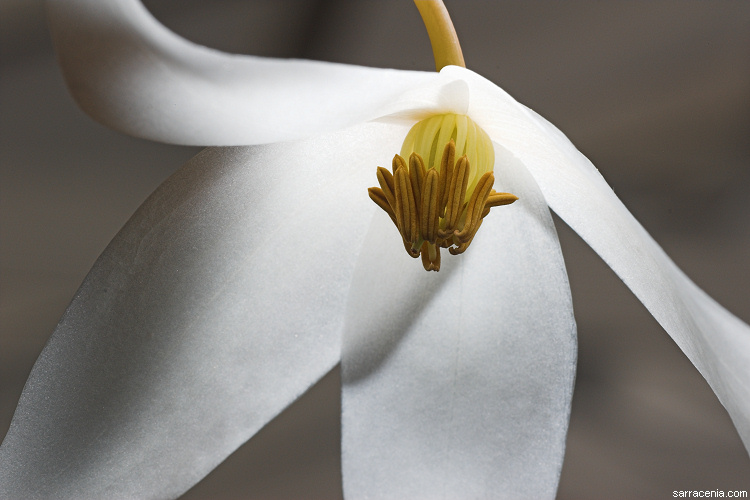
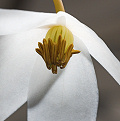 H. nutans
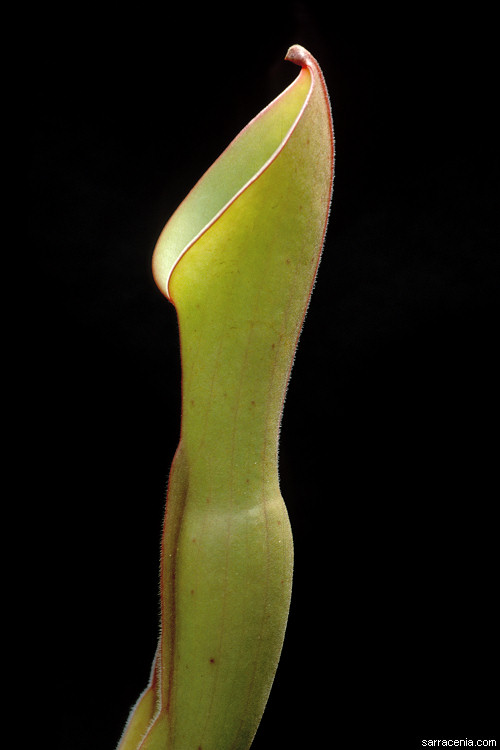
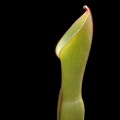 H. nutans
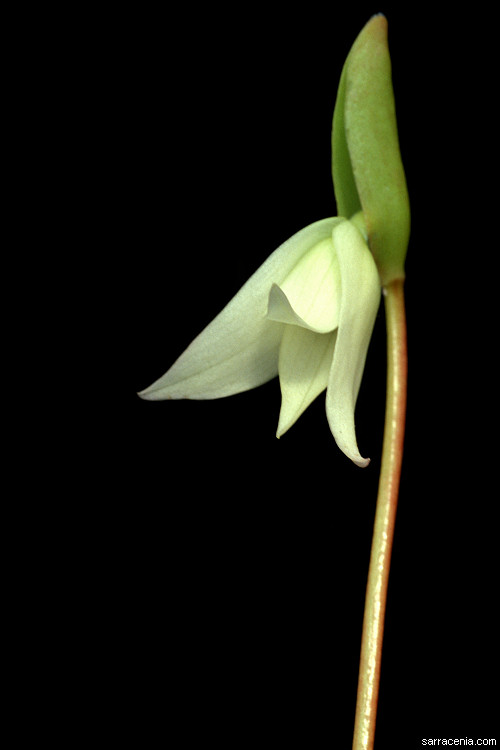
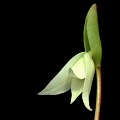 H. minor
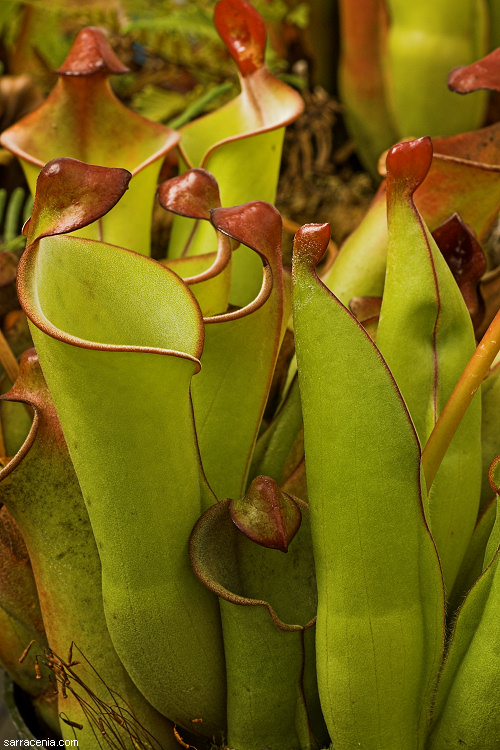
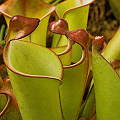 H. heterodoxa
Heliamphora sarracenioides
What an interesting species! The authors
of the species interpret this plant as having a huge nectar spoon that is essentially like a pitcher lid that one might see in
Sarracenia. A competing viewpoint is that the nectar spoon is entirely absent, as in
H. exappendiculata, and that the back of the pitcher is extended forwards in an arch.
Heliamphora uncinata
Identified by a strangely hook-shaped pitcher appendage,
it shares many form and nectary characteristics with Heliamphora exappendiculata.
Hybrids have been found from the area involving H. ionasi, H. chimantensis, H. heterodoxa variant #2,
H. pulchella, H. elongata, H. huberi, H. exappendiculata, H. glabra, H. nutans, H. purpurascens,
and H. sarracenioides.
Page citations: Berry, P., et al. 2005;
Fleischmann, A. et al. 2009;
Givnish, T.J. et al. 2000; McPherson, S. 2006; McPherson, S. et al. 2011;
Wistuba, A., et al. 2001; Wistuba, A., et al. 2002;
Rice, B. 2006a; Schlauer, J. 2002.


